
Understand the decision
A page can be accessible but weak as a source because its claim is vague, its example is absent or its service coverage is unclear. Evaluate usefulness at the page level.
Use actual sales and support needs to build the review set. Map each question to the page that should answer it. Identify unsupported new topics before expanding the publishing plan.
A practical workflow
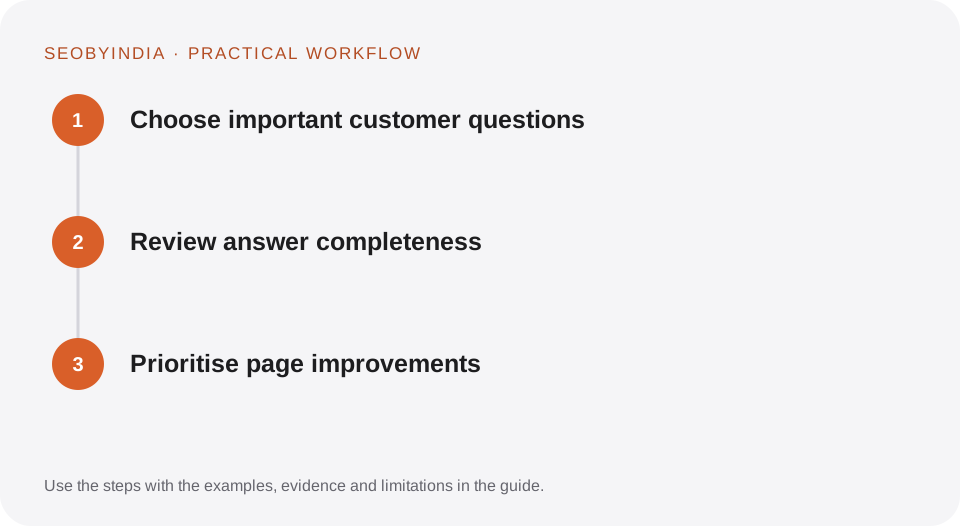
Work through the sequence below. Keep the evidence, the change you make and the acceptance check together so the next person can understand the decision.
Choose important customer questions
Use actual sales and support needs to build the review set. Map each question to the page that should answer it. Identify unsupported new topics before expanding the publishing plan.
Review answer completeness
Check the direct answer, necessary qualifications, examples, sources and next action. Note whether a reader needs information that the page never supplies.
Prioritise page improvements
Fix inaccurate business facts and technical blockers first. Improve existing pages before adding overlapping ones. Assign an owner and a specific acceptance check to each change.
Illustrative scenario
What this looks like in practice
The audit finds three pages explaining AI visibility in nearly identical language, but none describes how results are measured. The useful change is a clear measurement resource and better distinctions between the existing pages.
This is a worked example, not a claim about a client campaign or a promised result.
Before you sign it off
Do not confuse a longer page with a more complete answer. Remove repetition and unsupported promises while adding the details that affect a decision.
Keep a useful decision record
- Purpose
- Write the customer task this change is meant to improve.
- Evidence
- Save the relevant page, source or observation and its date.
- Owner
- Identify who implements the change and who verifies it.
- Acceptance
- State what a correct result looks like before measuring its wider effect.
What to measure
Track questions answered completely, factual corrections, technical accessibility and relevant observed citations over time.
Record the baseline and the observation window. If the measurement setup changes, annotate the report before comparing periods. Use the findings to choose the next useful improvement, rather than treating one encouraging result as proof of a permanent outcome.
Sources and further reading
These primary references provide platform guidance and context. The workflows and scenarios on this page are editorial explanations; a source link does not turn an example into a measured result.
Need help applying this?
Start with your website, target audience and the problem you want to solve. We can agree on the useful work, implementation responsibilities and reporting.
Explore the relevant serviceDiscuss the scope