
The short answer
Extract recurring problems and anonymize examples before using customer language in public content.
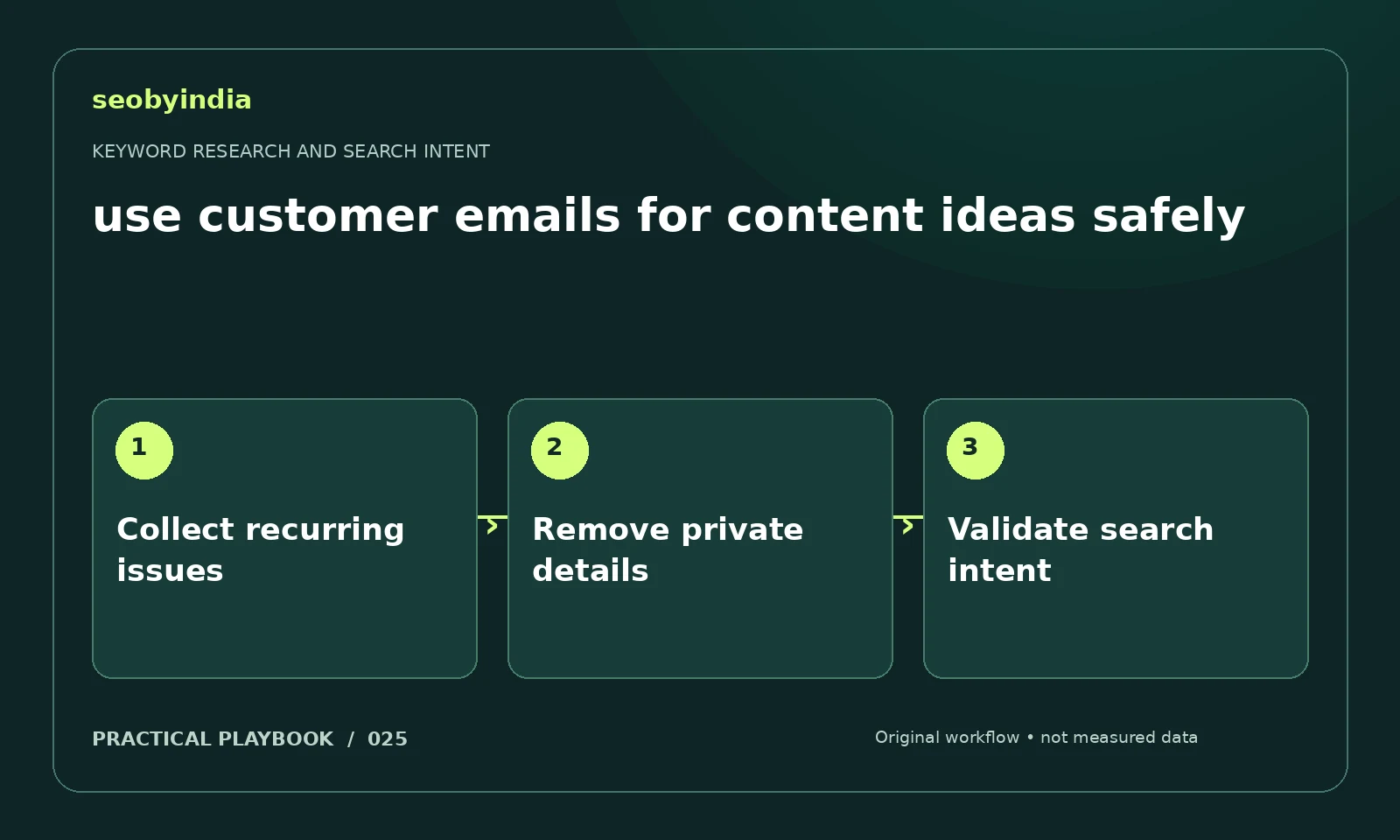
A three-step workflow
Collect recurring issues
Review authorized customer communications for recurring problems. Summarize the pattern instead of copying private conversation content.
Remove private details
Remove names, business details and other information that could identify the customer. Obtain permission before publishing a real case.
Validate search intent
Validate that the proposed article solves a wider task. Use a clearly hypothetical scenario when a public real example is unavailable.
Illustrative example
Put the decision in context
Several customers ask why reports differ. Build a guide explaining metric scopes without quoting a private email or naming the customer.
What to record in your working sheet
Keep the evidence beside the decision so the work can be checked and handed over. For this task, use these fields:
- Query or recurring customer question
- Intended task and current destination
- Demand signal with its source
- Chosen update or new page and rationale
A mistake to avoid
Publishing client messages as examples without permission.
References and further reading
The workflow and illustrative example are SEOByIndia editorial guidance. Use the linked primary documentation for platform requirements; interfaces and policies can change.
Need help applying this to your site?
Share your website, the problem you are investigating and the evidence you already have. We can discuss a focused scope and the next useful check.
Discuss a focused content plan