
The short answer
A crawler must be able to fetch a page to see its page-level noindex instruction.
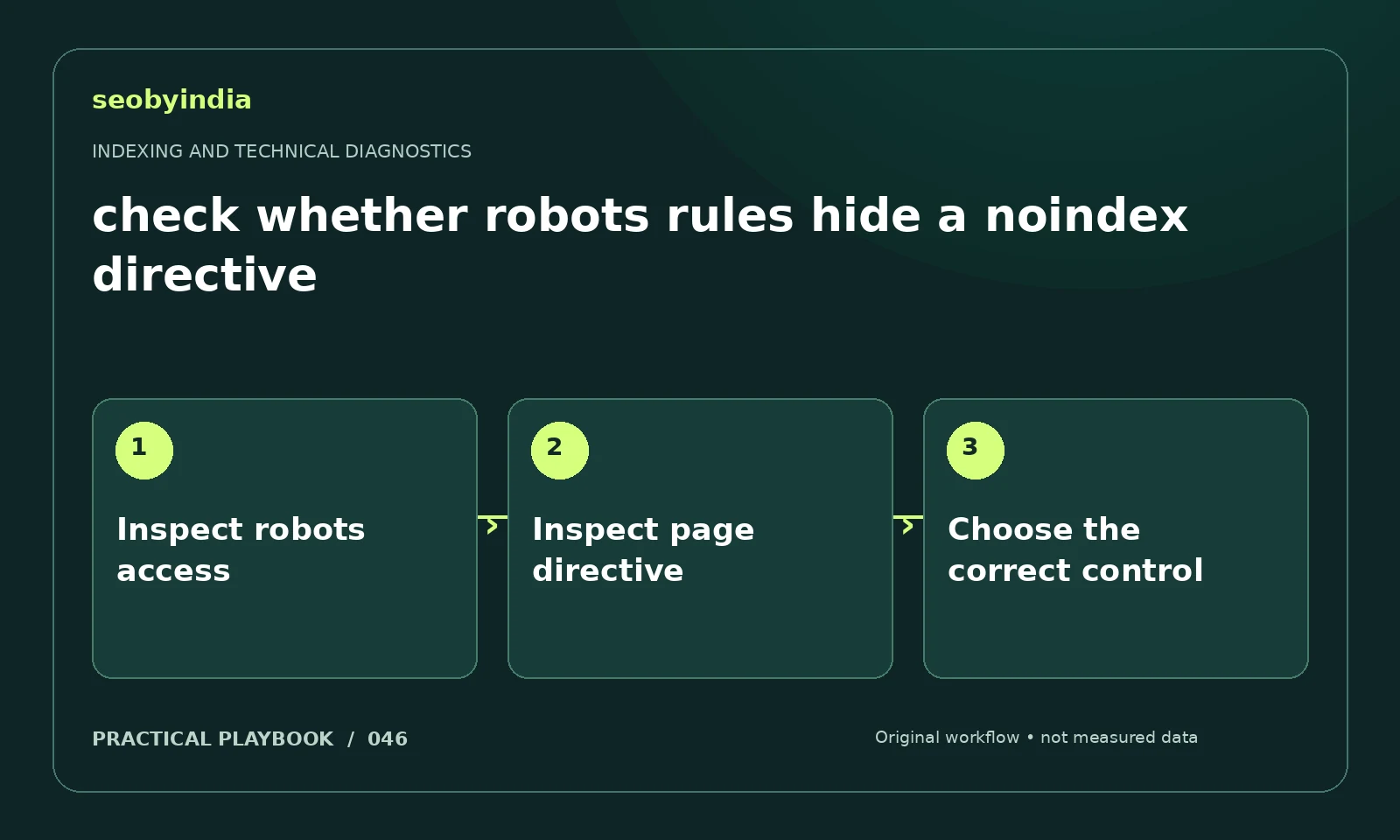
A three-step workflow
Inspect robots access
Inspect the relevant user-agent rules and determine whether the crawler can request the affected URL.
Inspect page directive
Inspect the page's meta robots or response header directive. Record which directive the crawler can actually receive.
Choose the correct control
Choose the control that matches the objective and validate it with the technical owner. Robots access and search exclusion are different mechanisms.
Illustrative example
Put the decision in context
An internal search URL is blocked in robots while its template carries noindex. Review whether the intended crawler can actually read that instruction.
What to record in your working sheet
Keep the evidence beside the decision so the work can be checked and handed over. For this task, use these fields:
- Affected URL and expected behavior
- Observed response and page directive
- Conflicting signal or supporting evidence
- Proposed fix, owner and retest result
A mistake to avoid
Putting a noindex instruction inside robots.txt.
References and further reading
The workflow and illustrative example are SEOByIndia editorial guidance. Use the linked primary documentation for platform requirements; interfaces and policies can change.
Need help applying this to your site?
Share your website, the problem you are investigating and the evidence you already have. We can discuss a focused scope and the next useful check.
Discuss a technical SEO audit