
The short answer
Create separate pages only when service delivery, evidence or customer needs differ enough to justify them.
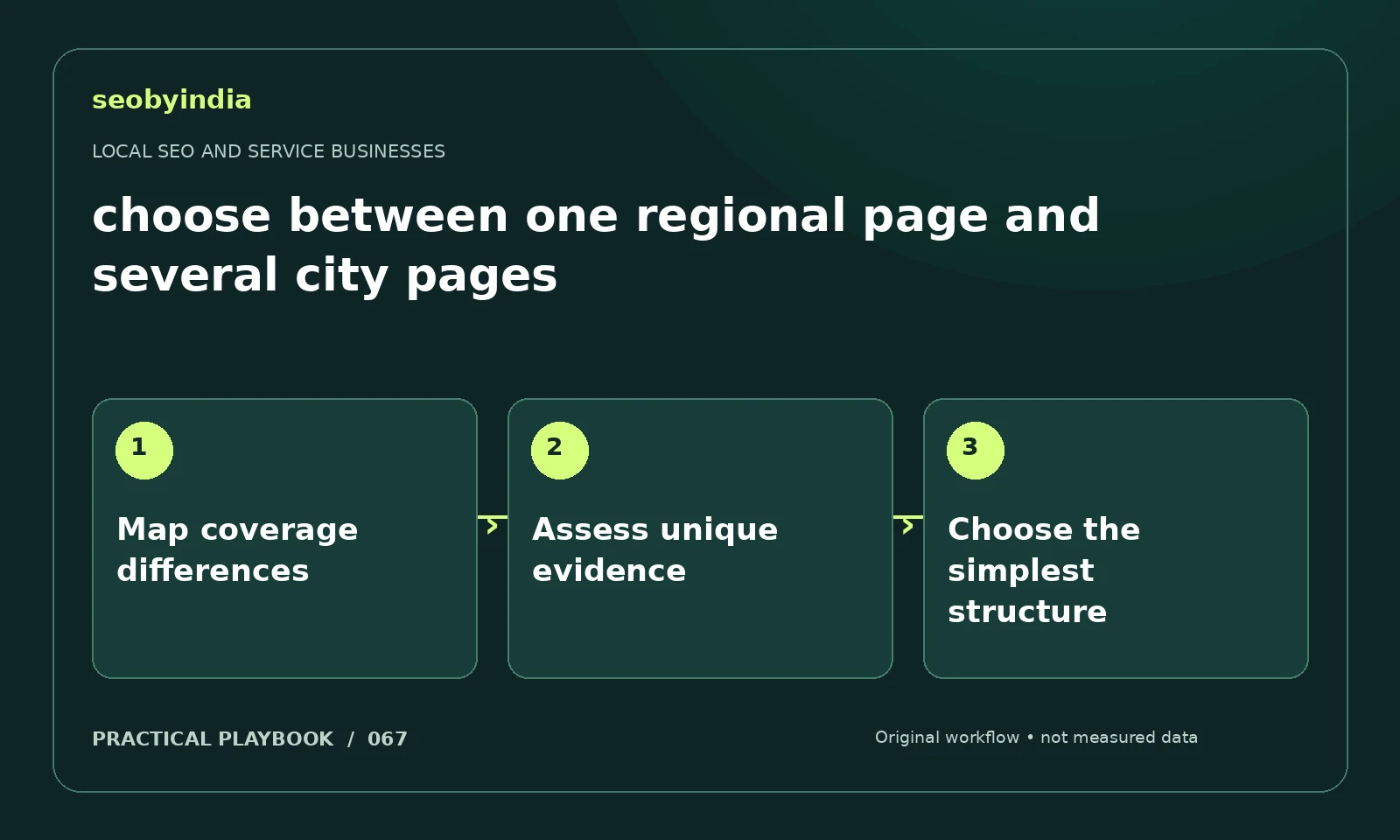
A three-step workflow
Map coverage differences
Map the actual differences in coverage, availability and service delivery across the proposed cities.
Assess unique evidence
Assess whether each page can provide truthful, independently useful detail. Do not invent local evidence to justify the structure.
Choose the simplest structure
Choose the fewest pages that answer the customer tasks well. A regional hub can link to genuine exceptions or separate service areas.
Illustrative example
Put the decision in context
If three nearby towns receive identical service with no meaningful local details, a clear regional page may answer the need better.
What to record in your working sheet
Keep the evidence beside the decision so the work can be checked and handed over. For this task, use these fields:
- Service and true coverage area
- Verified business details
- Customer booking or information gap
- Responsible owner and correction status
A mistake to avoid
Splitting one useful regional page into many thin copies.
References and further reading
The workflow and illustrative example are SEOByIndia editorial guidance. Use the linked primary documentation for platform requirements; interfaces and policies can change.
Need help applying this to your site?
Share your website, the problem you are investigating and the evidence you already have. We can discuss a focused scope and the next useful check.
Discuss your local service pages