
The short answer
Verify visible name, contact information, service details and entity type before generating markup.
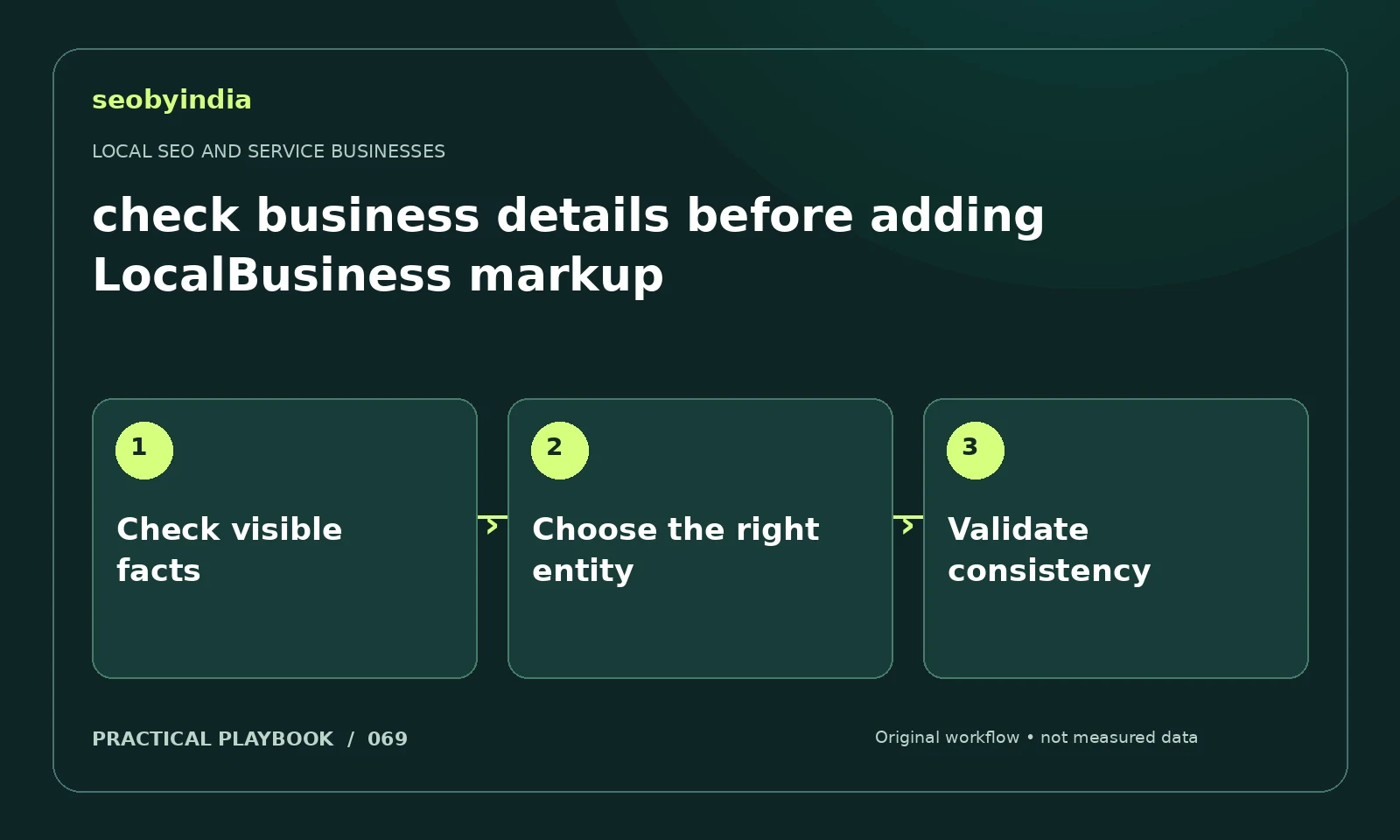
A three-step workflow
Check visible facts
Check the business name, contact route and service information on the visible page and authoritative business records.
Choose the right entity
Choose a schema entity that accurately describes the business. Add only properties supported by real visible facts.
Validate consistency
Validate the output and compare it with the page again. Structured data cannot make a false address or rating acceptable.
Illustrative example
Put the decision in context
A service-area business should not add a fictional storefront address or invented review score just to fill schema fields.
What to record in your working sheet
Keep the evidence beside the decision so the work can be checked and handed over. For this task, use these fields:
- Service and true coverage area
- Verified business details
- Customer booking or information gap
- Responsible owner and correction status
A mistake to avoid
Adding aggregate ratings that do not reflect eligible visible evidence.
References and further reading
The workflow and illustrative example are SEOByIndia editorial guidance. Use the linked primary documentation for platform requirements; interfaces and policies can change.
Need help applying this to your site?
Share your website, the problem you are investigating and the evidence you already have. We can discuss a focused scope and the next useful check.
Discuss your local service pages