
The short answer
Explain exactly how data was collected, cleaned and interpreted so readers can assess the finding.
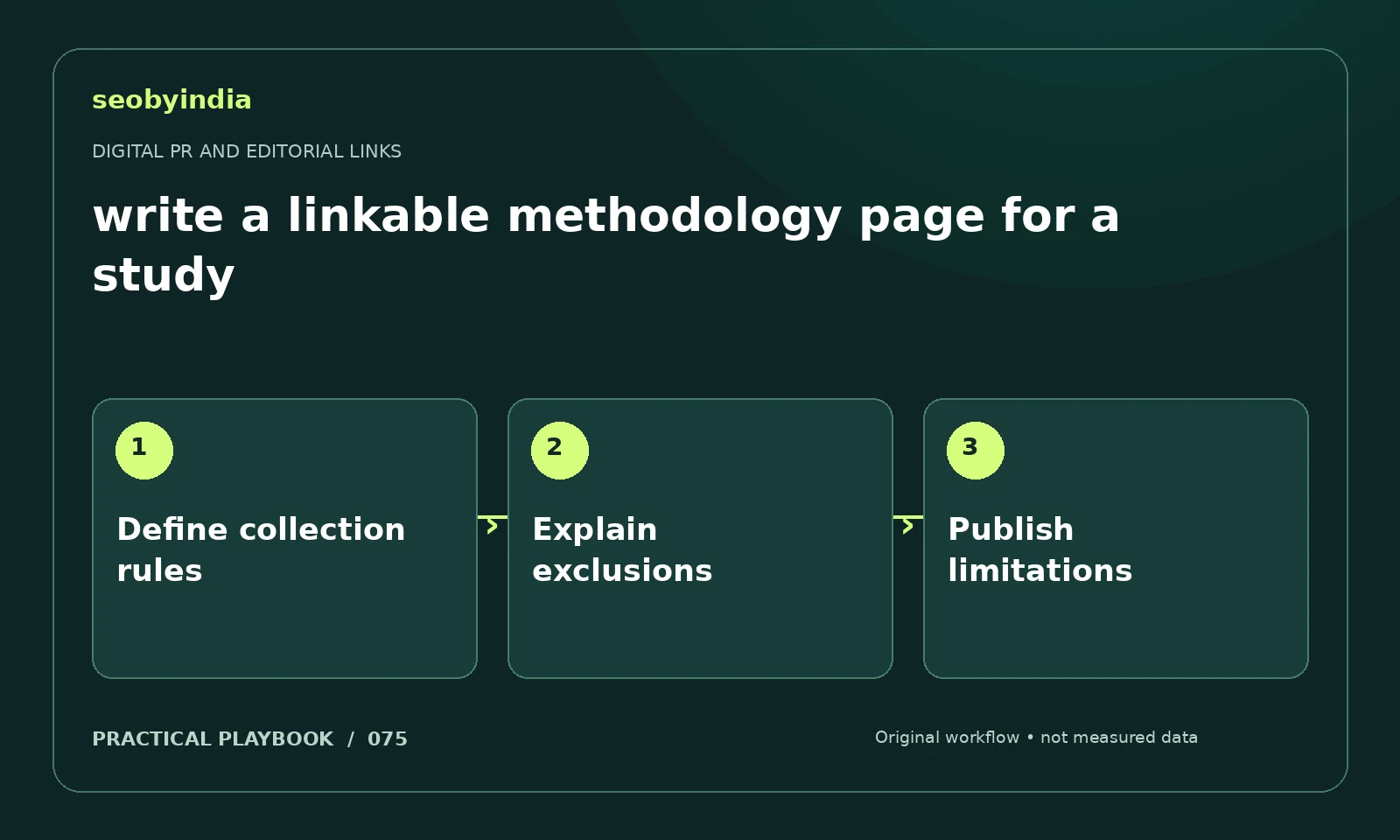
A three-step workflow
Define collection rules
Describe the collection period, sources and units of observation. Readers should know what one row in the dataset represents.
Explain exclusions
Explain cleaning, deduplication and exclusions in terms another analyst can follow. Do not silently remove inconvenient observations.
Publish limitations
Publish sample limits, uncertainty and any conflicts. Distinguish measured findings from editorial recommendations derived from them.
Illustrative example
Put the decision in context
A citation study should disclose platforms, prompts, observation dates and how unsupported citations were classified.
What to record in your working sheet
Keep the evidence beside the decision so the work can be checked and handed over. For this task, use these fields:
- Publication or resource URL
- Audience fit and evidence source
- Contact route or placement context
- Verified result and measurement limits
A mistake to avoid
Publishing a chart without explaining how its numbers were produced.
References and further reading
The workflow and illustrative example are SEOByIndia editorial guidance. Use the linked primary documentation for platform requirements; interfaces and policies can change.
Need help applying this to your site?
Share your website, the problem you are investigating and the evidence you already have. We can discuss a focused scope and the next useful check.
Discuss a relevant digital PR resource