
The short answer
Translate when the task is shared, and adapt when pricing, availability or service delivery genuinely differ.
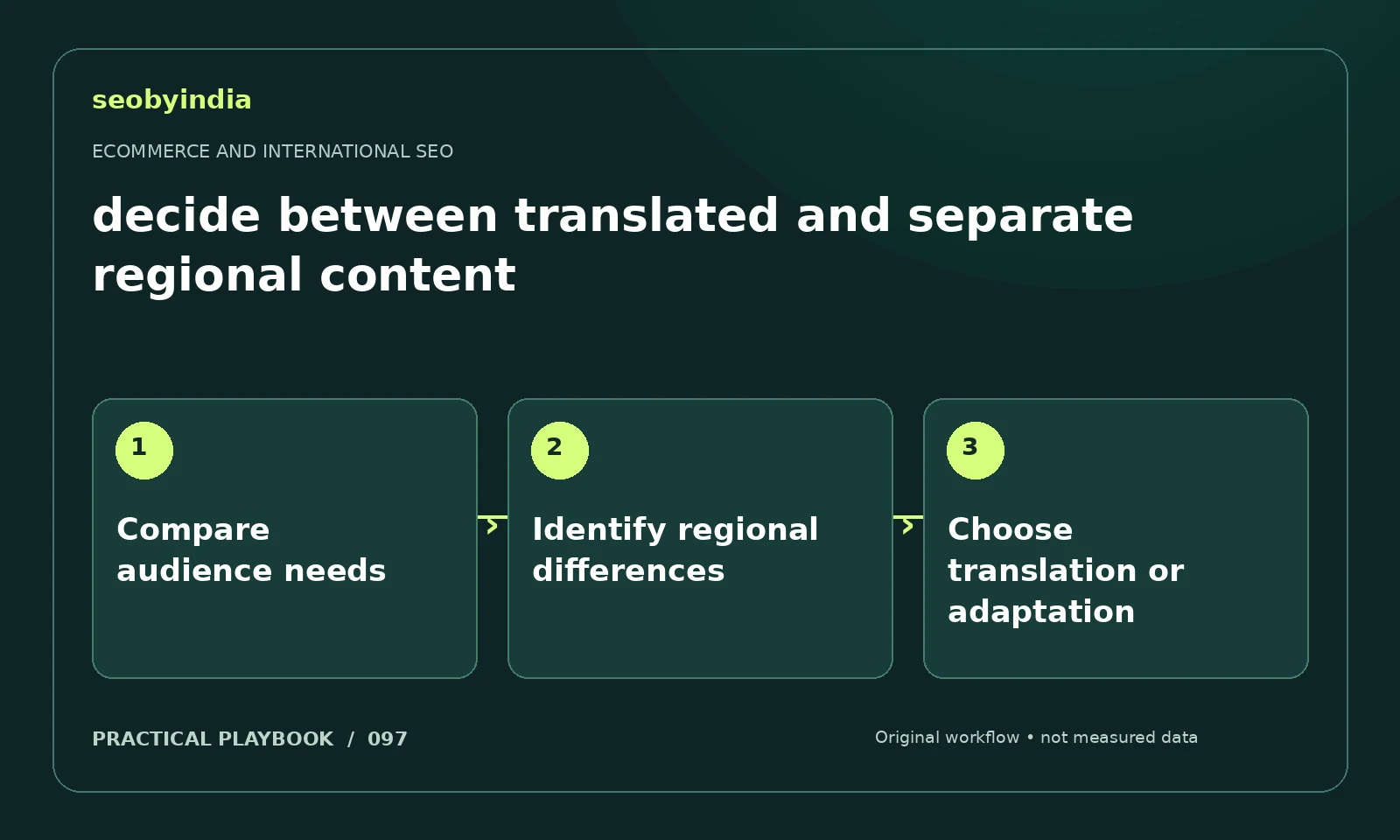
A three-step workflow
Compare audience needs
Compare the actual tasks and commercial conditions in each market. Identify differences in currency, availability, law or delivery that affect the answer.
Identify regional differences
Decide which differences require substantive adaptation rather than literal translation. Confirm service claims with the responsible business owner.
Choose translation or adaptation
Use a structure readers can navigate and label language versions accurately. Maintain each version when the underlying offer changes.
Illustrative example
Put the decision in context
A service operating in two markets may need region-specific scope and contact details, while a general technical guide may only need a translation.
What to record in your working sheet
Keep the evidence beside the decision so the work can be checked and handed over. For this task, use these fields:
- Product, regional or legacy URL
- Inventory or audience requirement
- Preferred destination and technical signals
- Implementation owner and verification result
A mistake to avoid
Machine-translating an offer that the business cannot deliver in that region.
References and further reading
The workflow and illustrative example are SEOByIndia editorial guidance. Use the linked primary documentation for platform requirements; interfaces and policies can change.
Need help applying this to your site?
Share your website, the problem you are investigating and the evidence you already have. We can discuss a focused scope and the next useful check.
Discuss your ecommerce or migration audit