
Filters help shoppers narrow a catalogue by size, material or stock. Each combination can also create a new URL, and two shoppers may reach the same selection by applying filters in a different order. Before changing a crawl rule, identify the filtered pages people could use as search landing pages and the controls they need once they arrive.
Build a sample from real paths
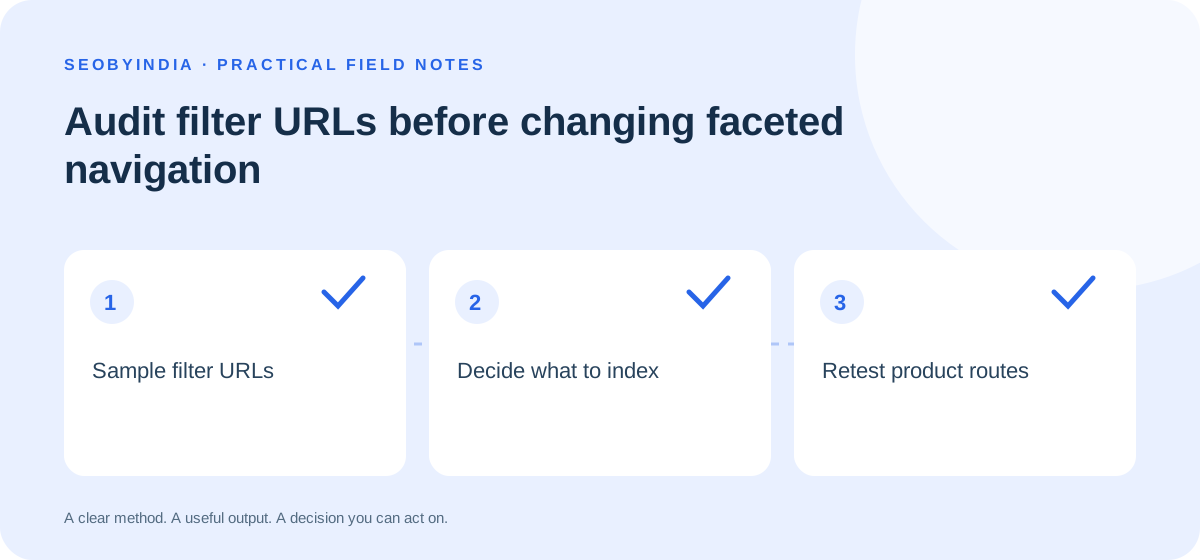
Pick one busy category and one with sparse stock. In each, open the unfiltered category, a single filter, two filters applied in both orders, a sort option, the second results page and an empty combination. Copy the final URLs and note which product links are available on each. Include a mobile check if mobile uses a different filtering component.
For each URL, record its response status, canonical target, whether it appears in the sitemap, how you reached it and the intended search treatment. Compare the product sets before assuming two URLs are equivalent. One set might have a similar title and completely different stock. A technical SEO fix queue gives you a place to put this evidence and assign each change. Build a technical SEO fix queue.
Separate landing pages from shopping controls
Give a selection a stable landing URL when it answers a durable shopping need, has enough inventory and gives readers useful context. Link to it from a relevant category and keep the sitemap and canonical signals consistent with that decision. Sort orders and short-lived stock filters can stay available to shoppers while you limit unnecessary crawling. Plan crawl rules only after you have checked the URLs they would match. If a URL already appears in search, address its indexing separately from any change to crawler access.
For filter URLs you leave crawlable, use one consistent URL format for an equivalent selection. Test empty or invalid combinations on their own URLs. Google recommends an HTTP 404 for these filter combinations, with a helpful recovery path on the page. Keep product detail URLs reachable via the ordinary category and its pagination. Check how canonical URLs fit the decision.
Example from a hypothetical desk catalogue
A shop has a permanent collection of standing desks but an unpredictable selection of walnut finishes. It makes /desks/standing/ a curated landing page with its own stock and size guidance. The filter combination ?finish=walnut&sort=price remains a shopping control. The team tests both orders of the parameters, checks that standing desks are still reachable through regular category links and confirms that the sitemap lists the curated page.
Sign off with a repeatable test
Repeat the same sample after release. Confirm the intended landing URL returns a successful response, shows the right products and has a consistent canonical. Open a product from page two and try the empty filter on mobile. Record the actual response for each row. If a product route disappeared, fix discovery before expanding the crawl rule to another category.