
The short answer
Review each provider's named crawlers and their documented purpose before changing access rules.
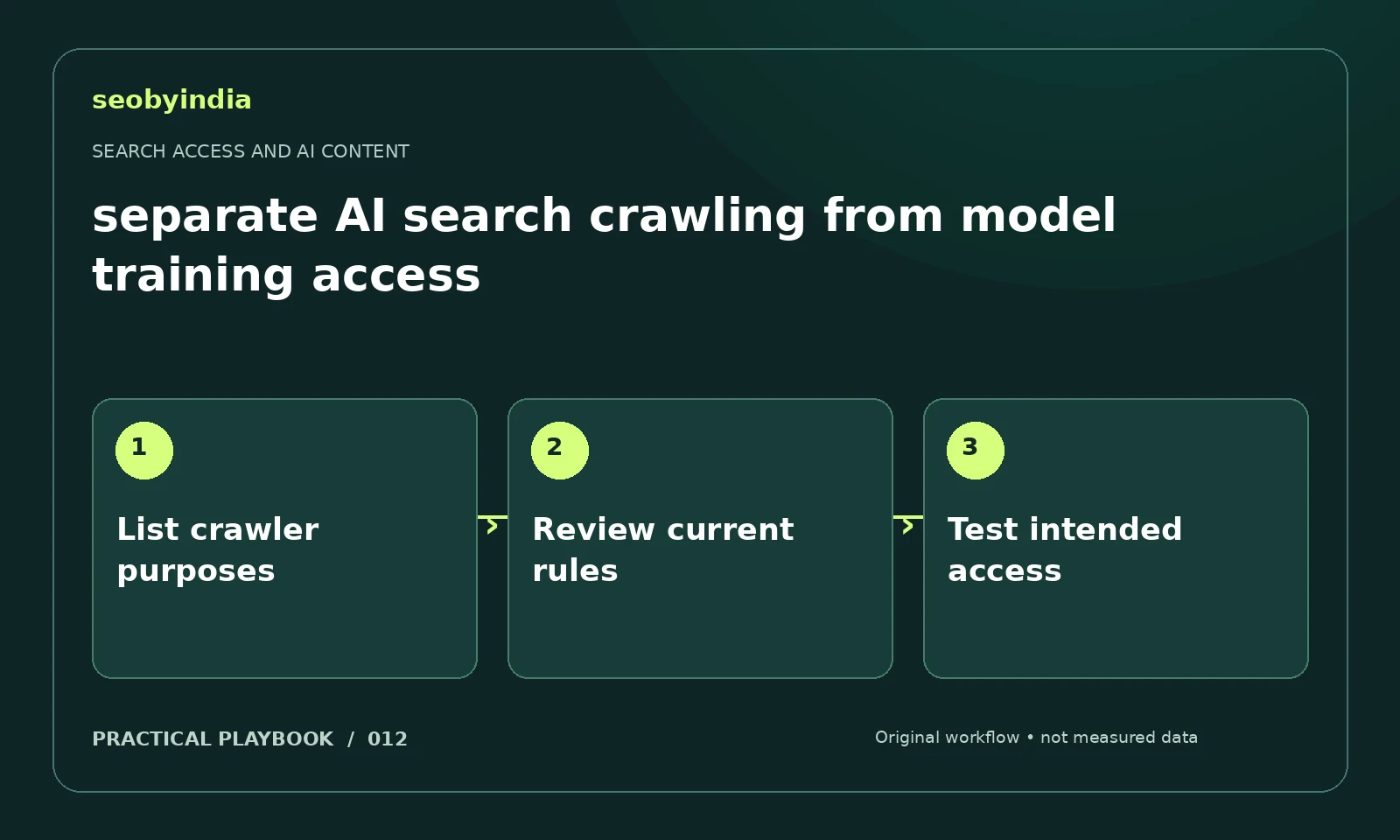
A three-step workflow
List crawler purposes
Build a list of relevant provider agents using current primary documentation. Distinguish search indexing, training and user-directed retrieval.
Review current rules
Read the current robots rules and any hosting restrictions. Check specific agent rules as well as broad default rules.
Test intended access
Implement only the intended policy with the technical owner. Validate search access without broadening access to private material.
Illustrative example
Put the decision in context
A publisher may choose search discovery while limiting training access. Check current provider documentation rather than treating every AI bot as one service.
What to record in your working sheet
Keep the evidence beside the decision so the work can be checked and handed over. For this task, use these fields:
- Affected URL and reader question
- Delivered content or source evidence
- Missing information or disputed claim
- Correction owner and verification date
A mistake to avoid
Allowing or blocking all AI agents with one unreviewed rule.
References and further reading
The workflow and illustrative example are SEOByIndia editorial guidance. Use the linked primary documentation for platform requirements; interfaces and policies can change.
Need help applying this to your site?
Share your website, the problem you are investigating and the evidence you already have. We can discuss a focused scope and the next useful check.
Discuss a public-page content audit