
The short answer
Answer the question directly, then explain the conditions that change the answer.
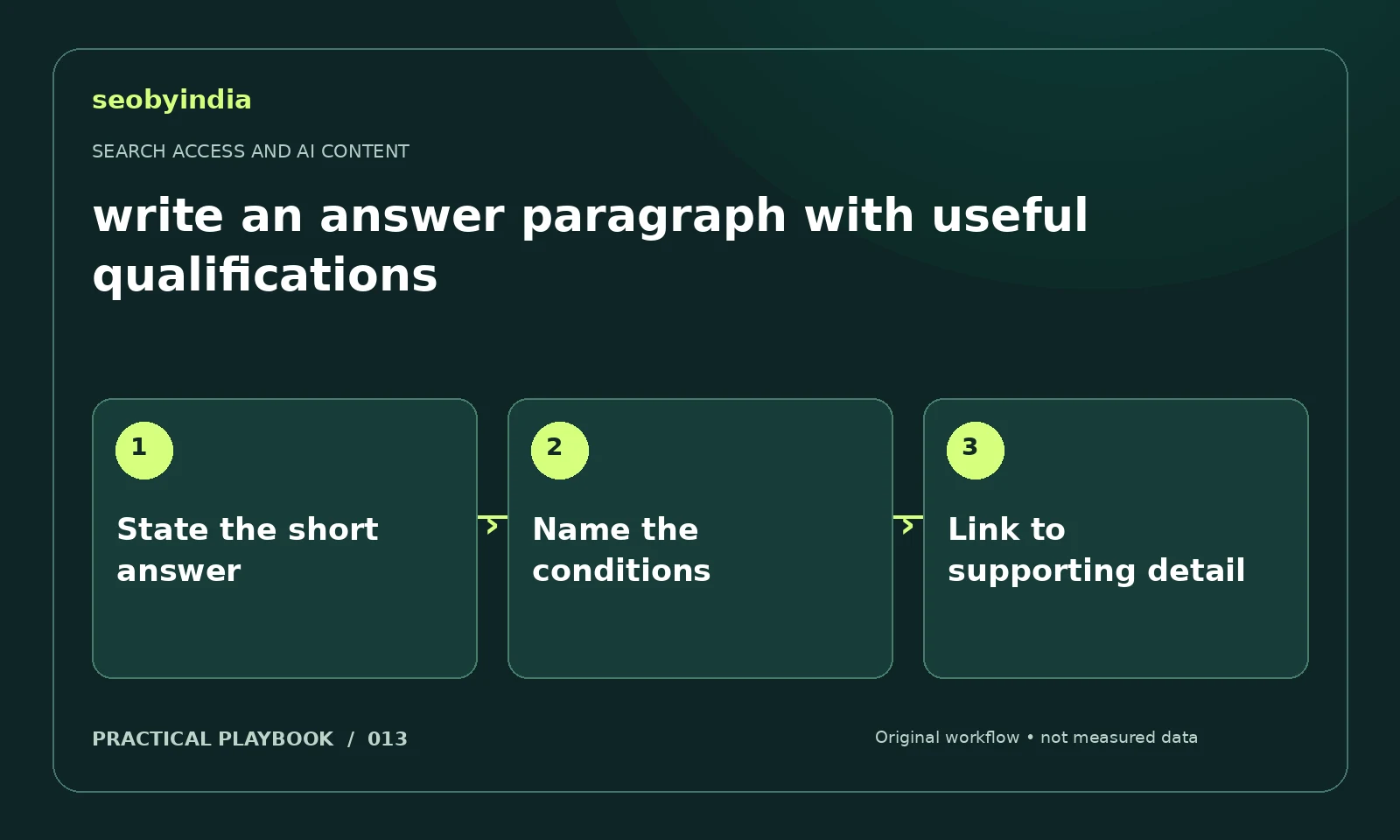
A three-step workflow
State the short answer
Write a first sentence that answers the specific question in ordinary language. Remove introductions that delay the useful information.
Name the conditions
Identify the exceptions a reader needs to avoid a wrong decision. Keep these immediately beside the answer.
Link to supporting detail
Provide a worked example or source note for the conditions. Readers should be able to understand why the answer changes.
Illustrative example
Put the decision in context
For an SEO cost question, explain scope, geography and competition before giving an illustrative scope example. Avoid an unsupported universal price.
What to record in your working sheet
Keep the evidence beside the decision so the work can be checked and handed over. For this task, use these fields:
- Affected URL and reader question
- Delivered content or source evidence
- Missing information or disputed claim
- Correction owner and verification date
A mistake to avoid
Removing important limitations to make a sentence more quotable.
References and further reading
The workflow and illustrative example are SEOByIndia editorial guidance. Use the linked primary documentation for platform requirements; interfaces and policies can change.
Need help applying this to your site?
Share your website, the problem you are investigating and the evidence you already have. We can discuss a focused scope and the next useful check.
Discuss a public-page content audit