
The short answer
Compare options on the same criteria and explain who each option suits.
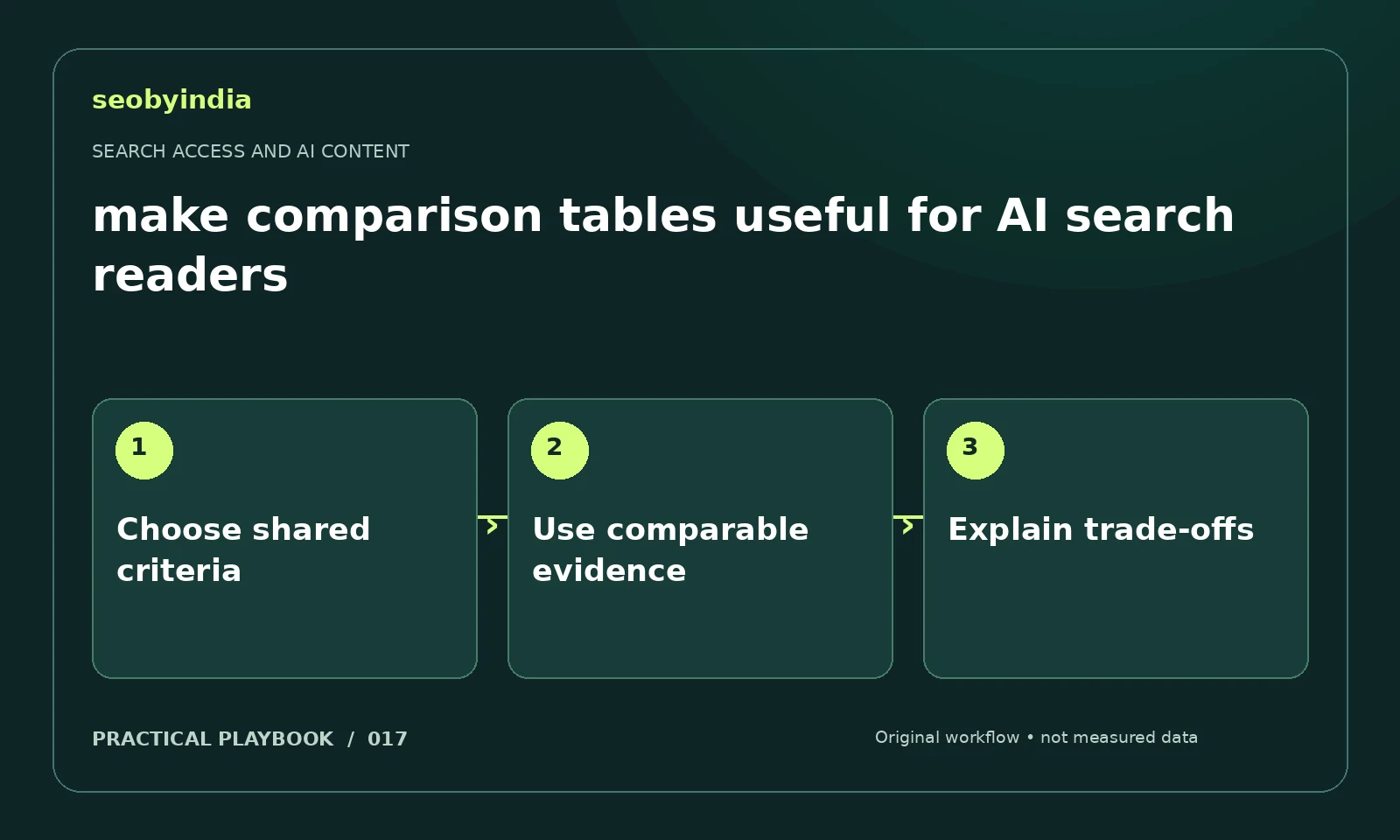
A three-step workflow
Choose shared criteria
Choose criteria that matter to a real decision. Compare the same scope, time period and type of evidence for all options.
Use comparable evidence
Fill cells using evidence you can inspect. Mark an unknown as unknown and identify any assumptions needed for comparison.
Explain trade-offs
Explain where each option is suitable. Include constraints so the table supports a decision rather than a promotional ranking.
Illustrative example
Put the decision in context
Compare SEO audit approaches by access required, deliverable and follow-up. Label unknown information instead of filling a cell with a guess.
What to record in your working sheet
Keep the evidence beside the decision so the work can be checked and handed over. For this task, use these fields:
- Affected URL and reader question
- Delivered content or source evidence
- Missing information or disputed claim
- Correction owner and verification date
A mistake to avoid
Designing a comparison solely to make your own product win.
References and further reading
The workflow and illustrative example are SEOByIndia editorial guidance. Use the linked primary documentation for platform requirements; interfaces and policies can change.
Need help applying this to your site?
Share your website, the problem you are investigating and the evidence you already have. We can discuss a focused scope and the next useful check.
Discuss a public-page content audit