
The short answer
Summarize the specific task and useful deliverable in natural language.
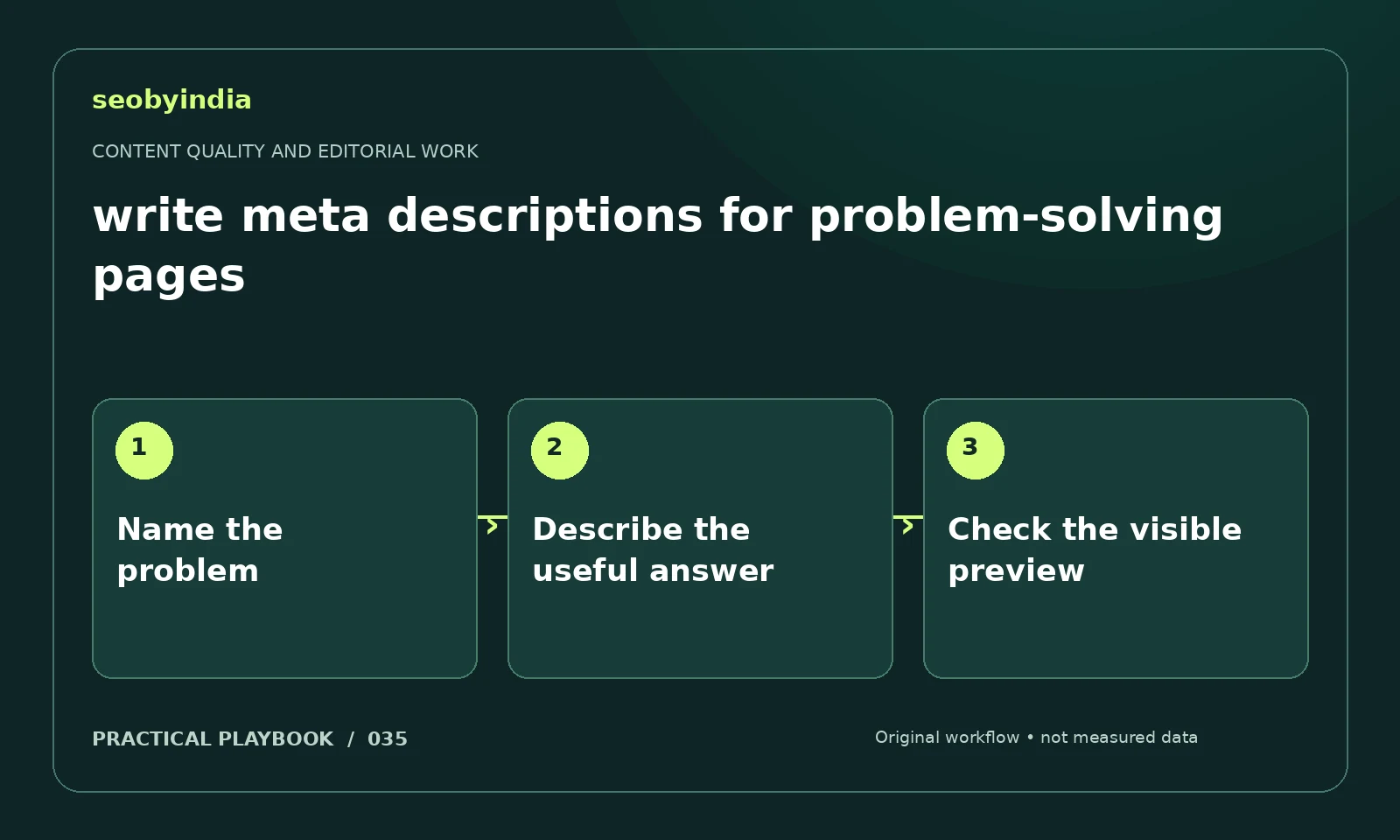
A three-step workflow
Name the problem
Identify the exact problem or decision the page addresses. Use the description to help readers recognize whether this is the right result.
Describe the useful answer
Name the useful method, checklist or explanation they will find. Keep the promise consistent with what the page actually delivers.
Check the visible preview
Review the result preview for clarity, but recognize that search engines may display a different snippet for different queries.
Illustrative example
Put the decision in context
A canonical troubleshooting description can mention checking source, redirects and selected URLs. Keep promises consistent with the article.
What to record in your working sheet
Keep the evidence beside the decision so the work can be checked and handed over. For this task, use these fields:
- Article URL and reader task
- Claim or section requiring work
- Source and proposed editorial change
- Reviewer, completion check and actual update date
A mistake to avoid
Promising a guaranteed ranking outcome in the search snippet.
References and further reading
The workflow and illustrative example are SEOByIndia editorial guidance. Use the linked primary documentation for platform requirements; interfaces and policies can change.
Need help applying this to your site?
Share your website, the problem you are investigating and the evidence you already have. We can discuss a focused scope and the next useful check.
Discuss an editorial content review