
The short answer
Prioritize pages with a clear audience problem and business role rather than refreshing every URL on a calendar.
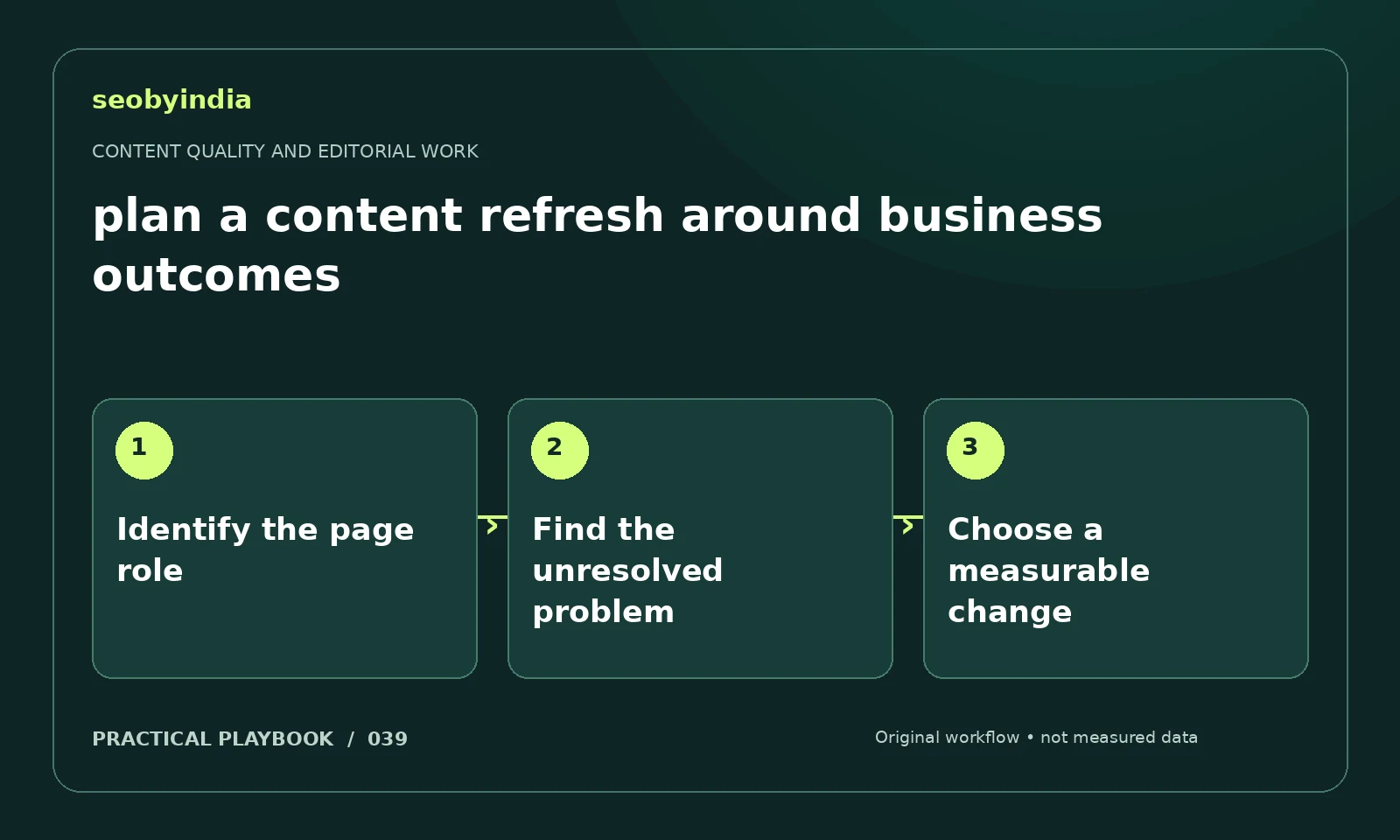
A three-step workflow
Identify the page role
Define whether the page is meant to educate, qualify an enquiry or help an existing customer complete a task.
Find the unresolved problem
Identify what prevents it from doing that job. Use query patterns, reader questions or observed journey problems as evidence.
Choose a measurable change
Choose a specific improvement and success measure. Document what changed so later interpretation does not depend on memory.
Illustrative example
Put the decision in context
A service guide with impressions but few enquiries may need clearer scope and an appropriate next step. Check tracking before interpreting conversion changes.
What to record in your working sheet
Keep the evidence beside the decision so the work can be checked and handed over. For this task, use these fields:
- Article URL and reader task
- Claim or section requiring work
- Source and proposed editorial change
- Reviewer, completion check and actual update date
A mistake to avoid
Refreshing solely to add a new year to the title.
References and further reading
The workflow and illustrative example are SEOByIndia editorial guidance. Use the linked primary documentation for platform requirements; interfaces and policies can change.
Need help applying this to your site?
Share your website, the problem you are investigating and the evidence you already have. We can discuss a focused scope and the next useful check.
Discuss an editorial content review