
The short answer
Compare crawl results with other URL sources such as sitemaps and analytics exports.
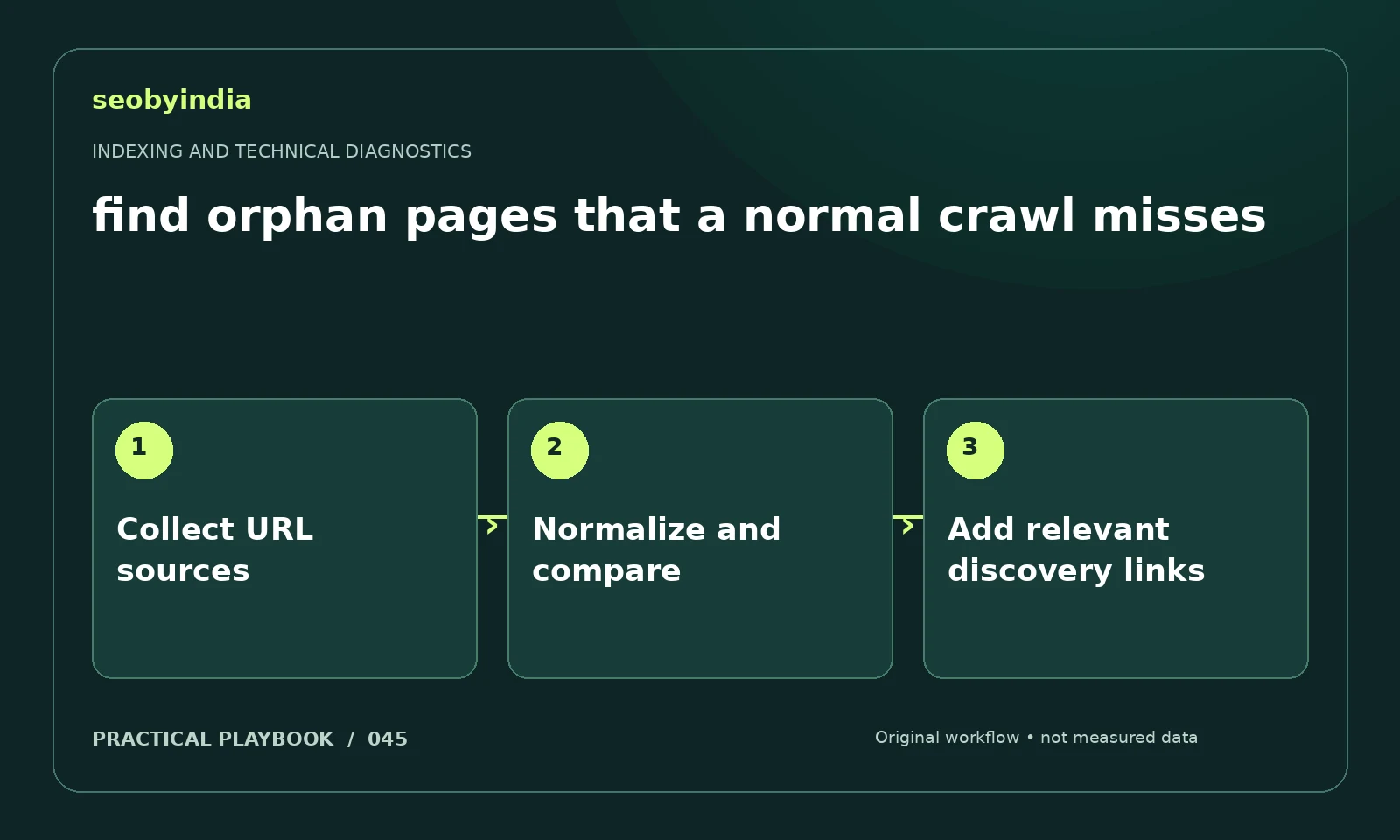
A three-step workflow
Collect URL sources
Gather available URLs from sitemaps, analytics and other authorized records. Each source may contain URLs a navigation crawl never found.
Normalize and compare
Normalize comparable URL forms and compare lists carefully. Verify that apparent orphan pages are real pages rather than tracking variants.
Add relevant discovery links
For useful live pages, add an appropriate contextual link. Retire obsolete pages according to their purpose rather than linking everything indiscriminately.
Illustrative example
Put the decision in context
A guide receiving visits appears in analytics but not in a navigation crawl. Verify its status and give useful content a relevant internal link.
What to record in your working sheet
Keep the evidence beside the decision so the work can be checked and handed over. For this task, use these fields:
- Affected URL and expected behavior
- Observed response and page directive
- Conflicting signal or supporting evidence
- Proposed fix, owner and retest result
A mistake to avoid
Assuming a crawler can discover every live URL by itself.
References and further reading
The workflow and illustrative example are SEOByIndia editorial guidance. Use the linked primary documentation for platform requirements; interfaces and policies can change.
Need help applying this to your site?
Share your website, the problem you are investigating and the evidence you already have. We can discuss a focused scope and the next useful check.
Discuss a technical SEO audit