
The short answer
Check whether the page delivers a substantive service answer rather than an error-like or empty experience.
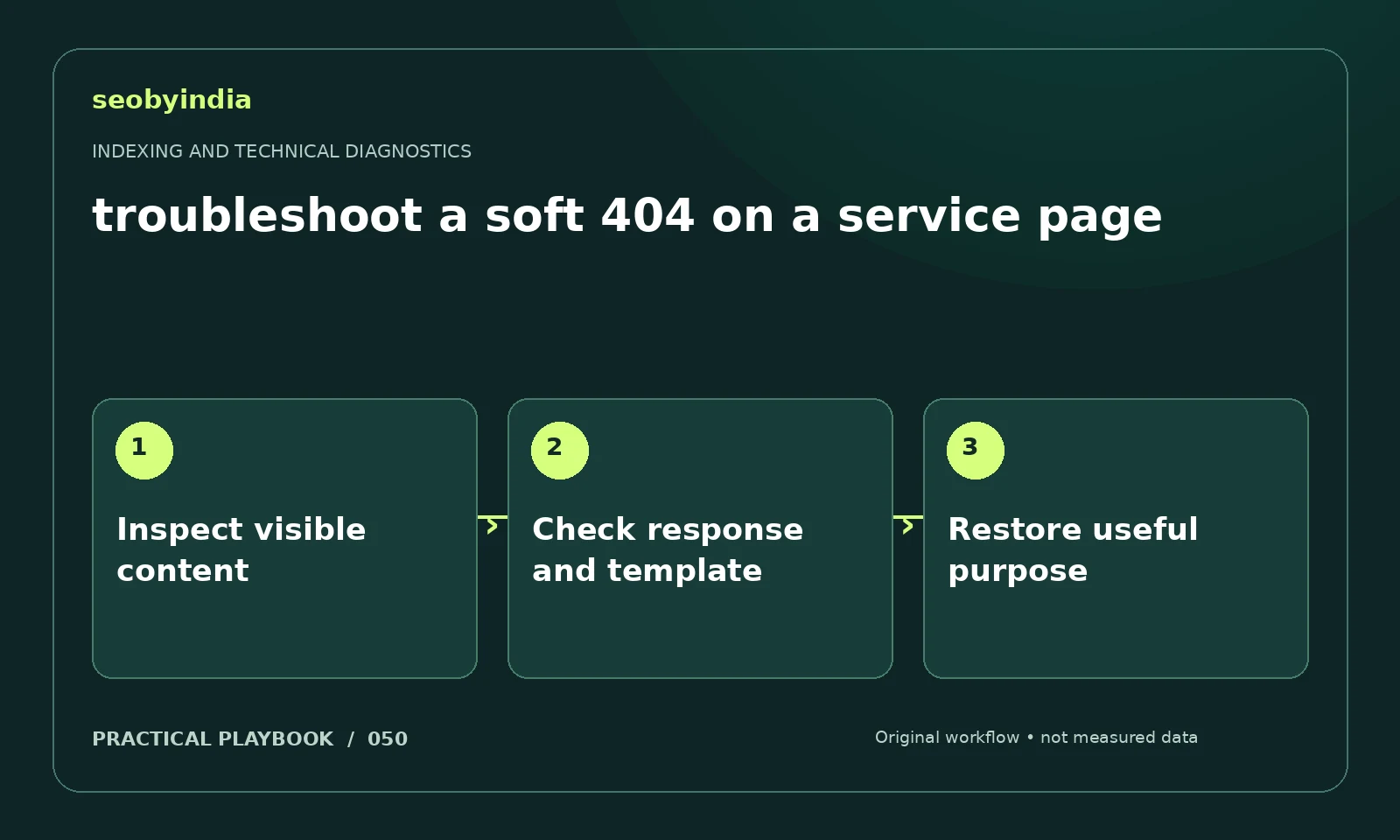
A three-step workflow
Inspect visible content
Read the page as a customer would. Identify empty main content, error-like messaging or a promise the page no longer fulfills.
Check response and template
Check the response status and compare similar templates. A successful transport response does not establish the page's usefulness.
Restore useful purpose
Restore a real service answer where the service exists. If the page is genuinely gone, use the appropriate handling and update references.
Illustrative example
Put the decision in context
A service URL returns success but shows only service unavailable and a navigation menu. Decide whether to restore the page or return an appropriate unavailable response.
What to record in your working sheet
Keep the evidence beside the decision so the work can be checked and handed over. For this task, use these fields:
- Affected URL and expected behavior
- Observed response and page directive
- Conflicting signal or supporting evidence
- Proposed fix, owner and retest result
A mistake to avoid
Assuming HTTP 200 means a page is useful and indexable.
References and further reading
The workflow and illustrative example are SEOByIndia editorial guidance. Use the linked primary documentation for platform requirements; interfaces and policies can change.
Need help applying this to your site?
Share your website, the problem you are investigating and the evidence you already have. We can discuss a focused scope and the next useful check.
Discuss a technical SEO audit