
The short answer
Check page value, discovery paths and server accessibility before repeatedly requesting indexing.
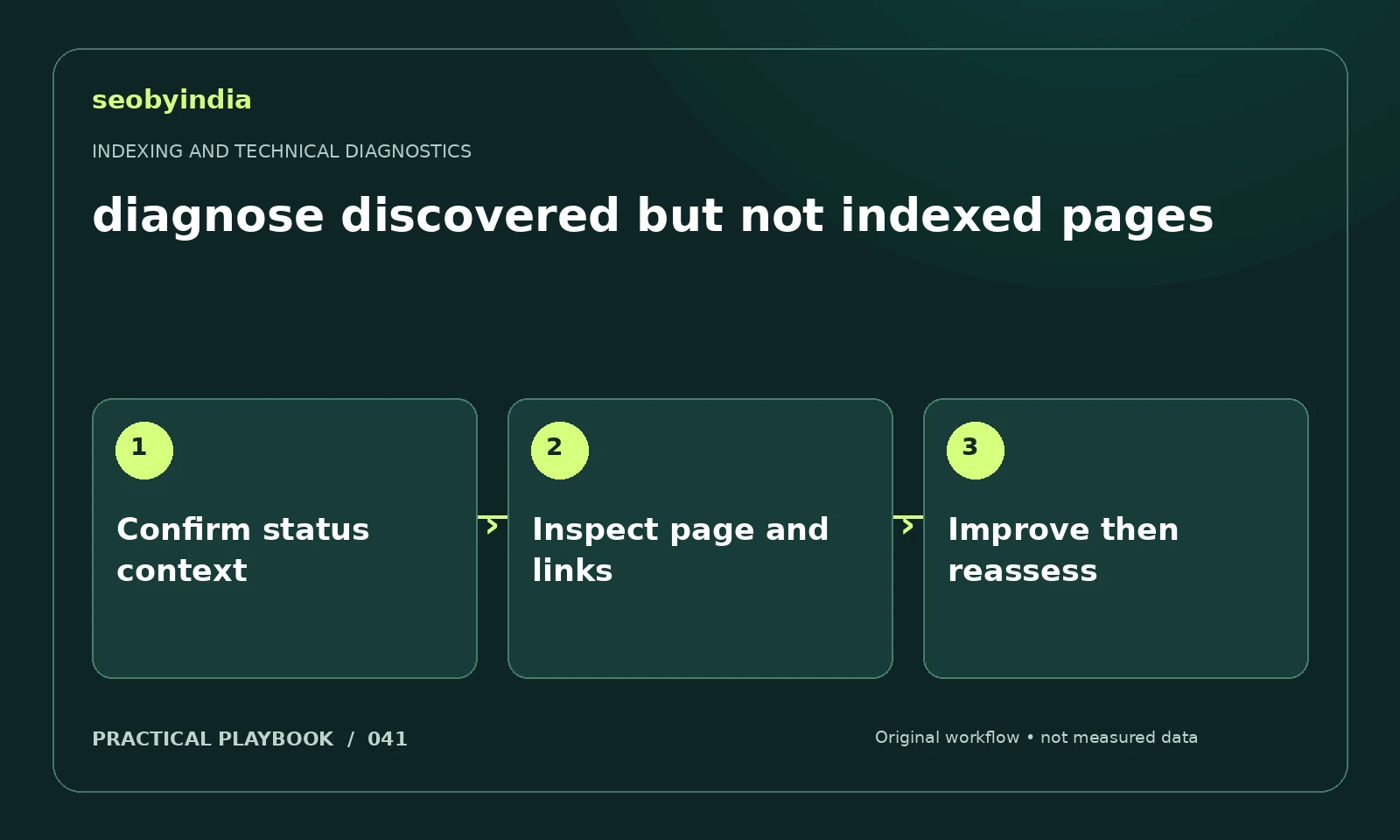
A three-step workflow
Confirm status context
Read the status in context and inspect a representative URL. Distinguish a recently discovered page from an established page with persistent issues.
Inspect page and links
Check accessibility, substantive content and relevant internal links. Compare it with other pages that answer the same task.
Improve then reassess
Improve the underlying issue and observe later reports. Do not promise a fixed indexing date or treat repeated requests as a repair.
Illustrative example
Put the decision in context
A new page linked only from an XML sitemap may need a relevant navigation path and a more complete answer. Indexing remains a search engine decision.
What to record in your working sheet
Keep the evidence beside the decision so the work can be checked and handed over. For this task, use these fields:
- Affected URL and expected behavior
- Observed response and page directive
- Conflicting signal or supporting evidence
- Proposed fix, owner and retest result
A mistake to avoid
Submitting the same URL repeatedly without changing the underlying issue.
References and further reading
The workflow and illustrative example are SEOByIndia editorial guidance. Use the linked primary documentation for platform requirements; interfaces and policies can change.
Need help applying this to your site?
Share your website, the problem you are investigating and the evidence you already have. We can discuss a focused scope and the next useful check.
Discuss a technical SEO audit