
The short answer
Check names, dates, numbers and citations against primary sources before approving a draft.
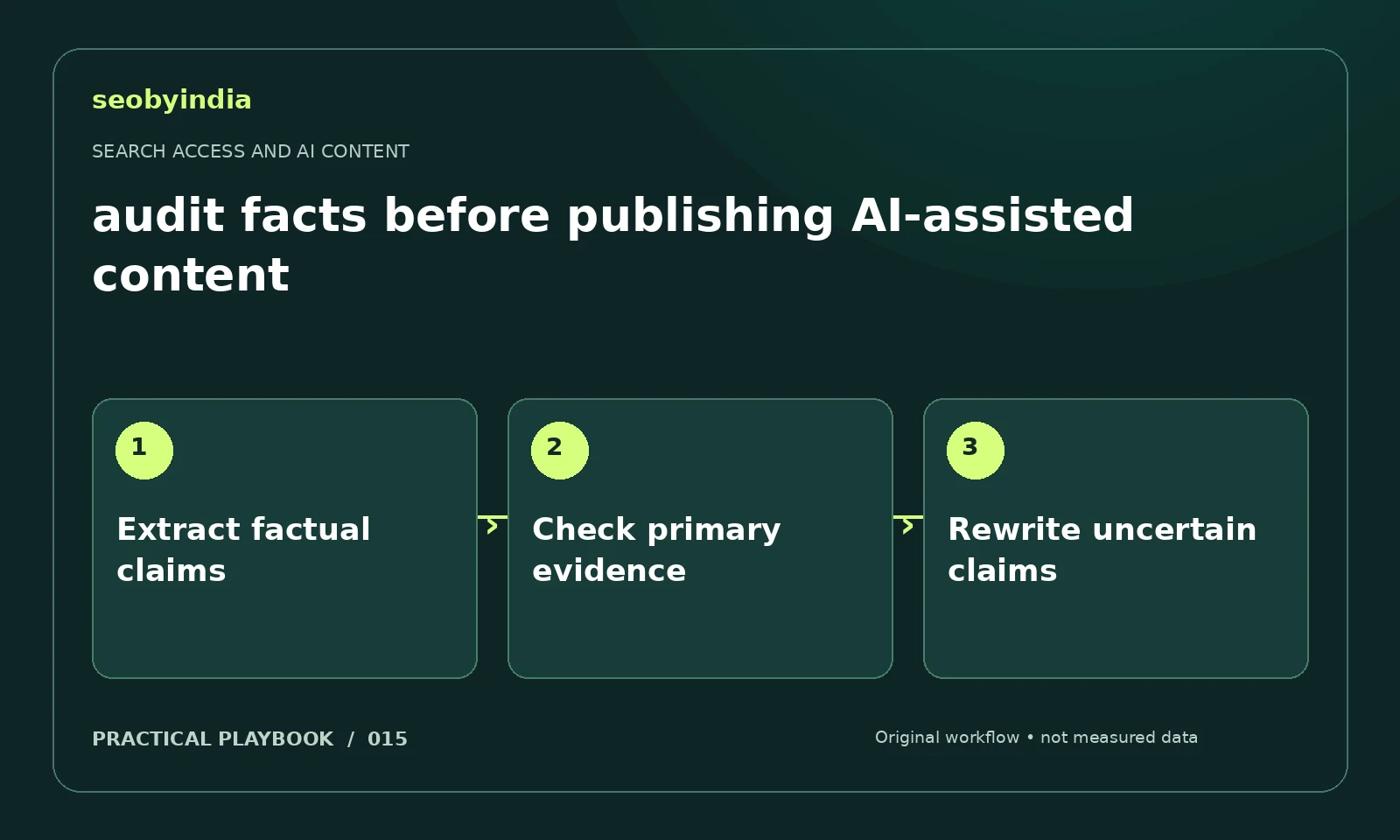
A three-step workflow
Extract factual claims
Make a list of factual claims from the draft, including product names, numerical statements and references to platform rules.
Check primary evidence
Open the original documentation or research for each material claim. Record the passage or context used to verify it.
Rewrite uncertain claims
Correct outdated or unsupported statements. If evidence remains unavailable, qualify the claim or remove it rather than inventing a source.
Illustrative example
Put the decision in context
A draft names a crawler that no longer matches the provider documentation. Correct the name and scope before publication and save the source used.
What to record in your working sheet
Keep the evidence beside the decision so the work can be checked and handed over. For this task, use these fields:
- Affected URL and reader question
- Delivered content or source evidence
- Missing information or disputed claim
- Correction owner and verification date
A mistake to avoid
Treating fluent AI output as verified research.
References and further reading
The workflow and illustrative example are SEOByIndia editorial guidance. Use the linked primary documentation for platform requirements; interfaces and policies can change.
Need help applying this to your site?
Share your website, the problem you are investigating and the evidence you already have. We can discuss a focused scope and the next useful check.
Discuss a public-page content audit