
The short answer
Use first-user dimensions for initial discovery and session dimensions for the current visit's acquisition context.
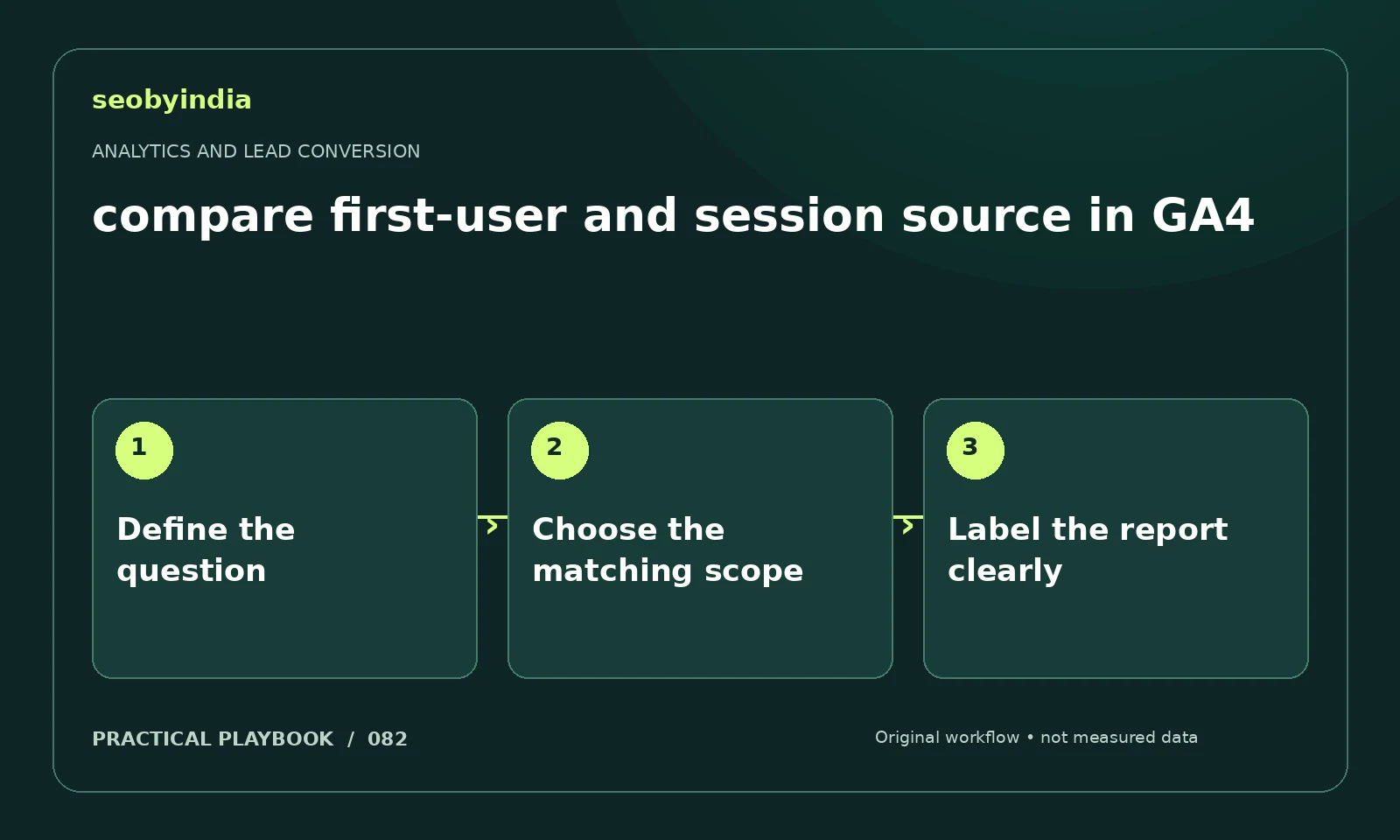
A three-step workflow
Define the question
Decide whether the report concerns initial acquisition or the source of a particular visit. Write that question at the top of the report.
Choose the matching scope
Choose dimensions with the appropriate scope and avoid mixing superficially similar source fields.
Label the report clearly
Explain why the numbers can differ using a returning-user example. Report names should make the scope clear to nontechnical stakeholders.
Illustrative example
Put the decision in context
A returning visitor first found you through search but visits later through a newsletter. Both reports can be correct because they answer different questions.
What to record in your working sheet
Keep the evidence beside the decision so the work can be checked and handed over. For this task, use these fields:
- Page, event or report name
- Metric scope and counting rule
- Observed record and comparison period
- Known tracking gaps and next validation
A mistake to avoid
Mixing first-user and session metrics without naming the scope.
References and further reading
The workflow and illustrative example are SEOByIndia editorial guidance. Use the linked primary documentation for platform requirements; interfaces and policies can change.
Need help applying this to your site?
Share your website, the problem you are investigating and the evidence you already have. We can discuss a focused scope and the next useful check.
Discuss lead measurement