
The short answer
Show a transparent limited assessment and explain what a fuller audit would examine.
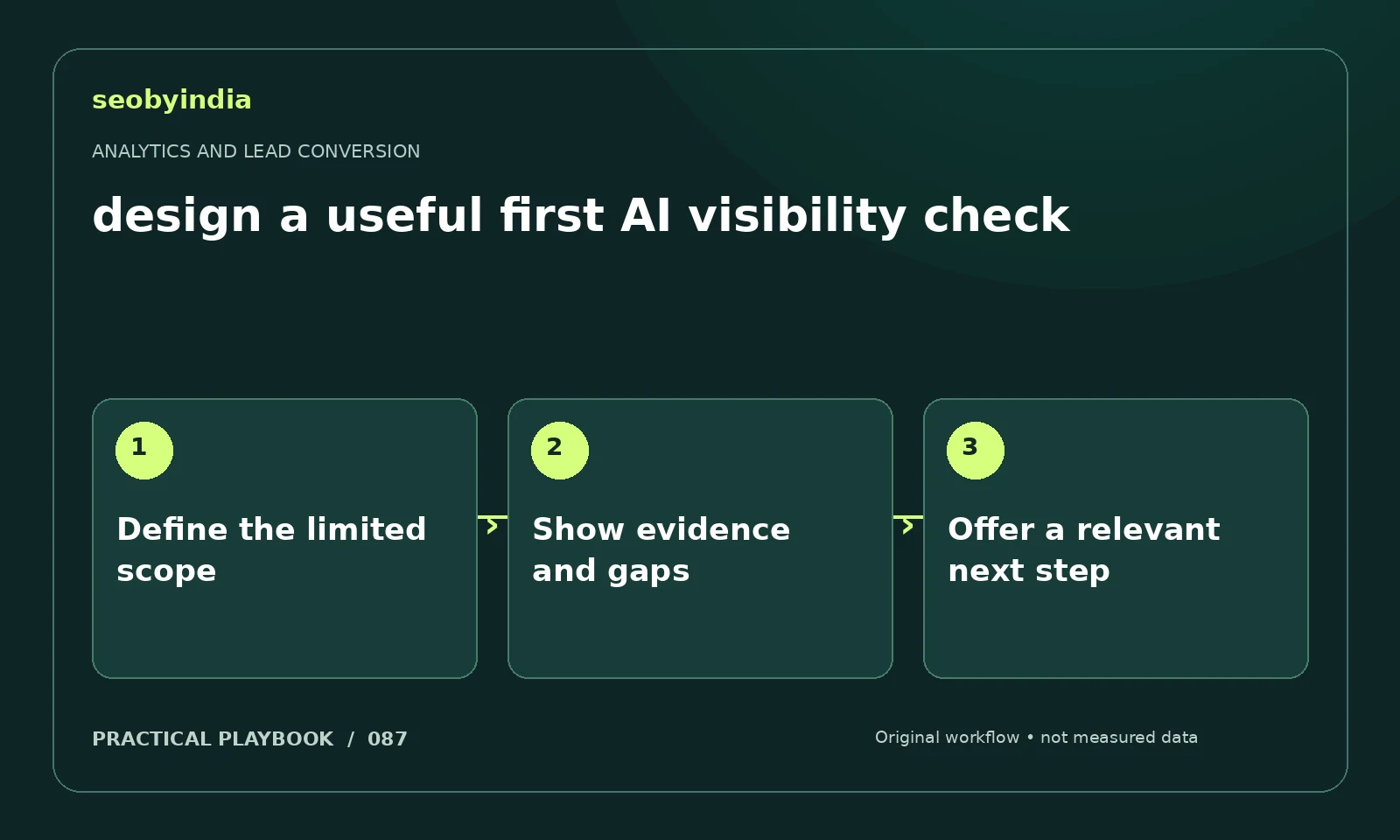
A three-step workflow
Define the limited scope
State which public checks are included and what cannot be assessed without private data or broader observation.
Show evidence and gaps
Show the pages, questions and evidence examined. Explain missing inputs rather than replacing them with a fabricated score.
Offer a relevant next step
Offer a fuller review only when it addresses a real unresolved question. Describe its deliverable and access needs clearly.
Illustrative example
Put the decision in context
A first check can review public accessibility and a small prompt sample. Label it a sample assessment rather than a complete visibility score.
What to record in your working sheet
Keep the evidence beside the decision so the work can be checked and handed over. For this task, use these fields:
- Page, event or report name
- Metric scope and counting rule
- Observed record and comparison period
- Known tracking gaps and next validation
A mistake to avoid
Showing a fabricated score before examining the website.
References and further reading
The workflow and illustrative example are SEOByIndia editorial guidance. Use the linked primary documentation for platform requirements; interfaces and policies can change.
Need help applying this to your site?
Share your website, the problem you are investigating and the evidence you already have. We can discuss a focused scope and the next useful check.
Discuss lead measurement