
The short answer
Each local page should solve a real location-specific customer need rather than repeating the same copy with a city swap.
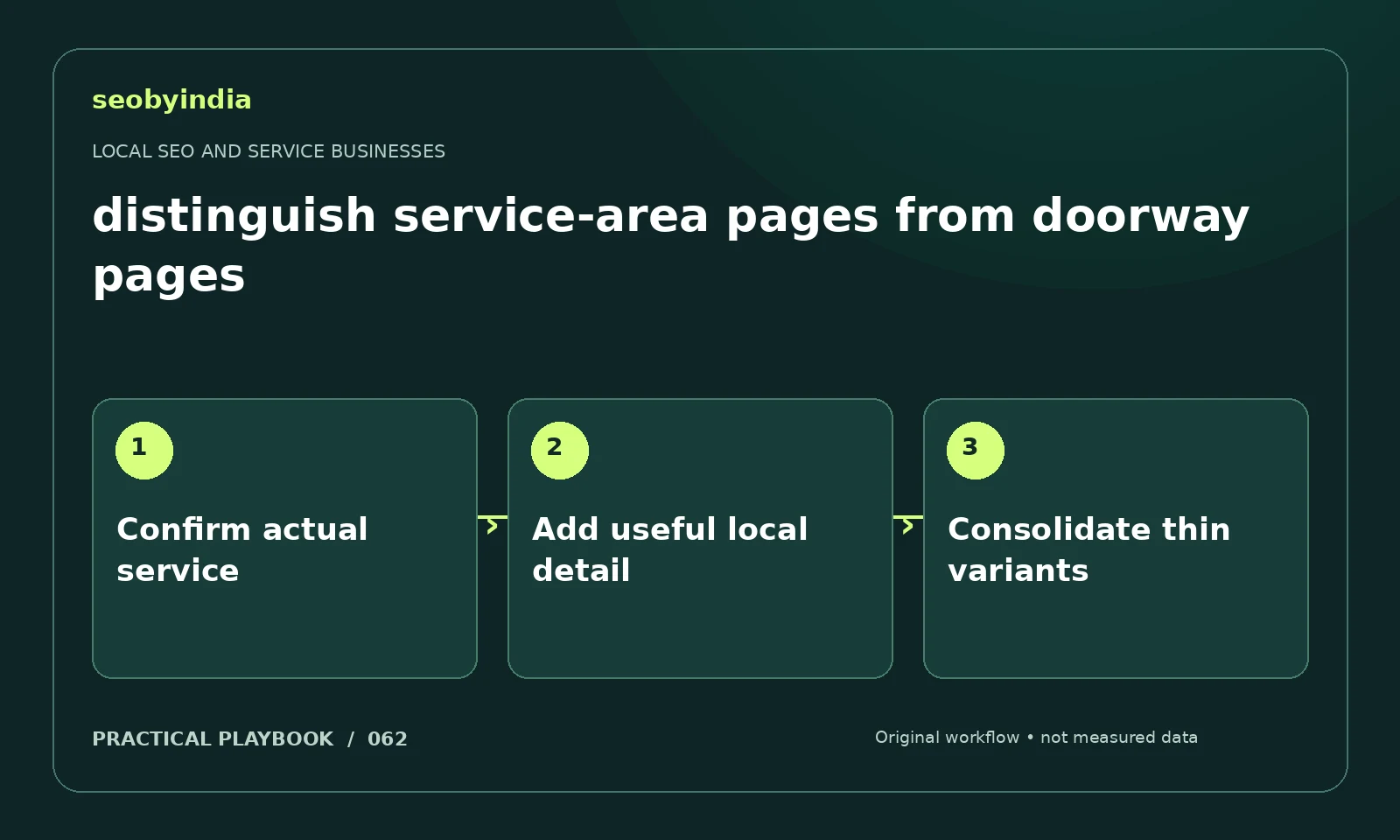
A three-step workflow
Confirm actual service
Verify that the location is served and identify the customer task. Do not create a city page before confirming the offer is real.
Add useful local detail
Add details that matter locally, such as coverage, scheduling or genuine project evidence. Generic place-name substitutions add little value.
Consolidate thin variants
Merge pages that cannot offer an independently useful answer. Keep navigation focused on actual customer choices.
Illustrative example
Put the decision in context
A contractor page may explain coverage boundaries and booking constraints. If nothing useful differs by town, one stronger regional page may suffice.
What to record in your working sheet
Keep the evidence beside the decision so the work can be checked and handed over. For this task, use these fields:
- Service and true coverage area
- Verified business details
- Customer booking or information gap
- Responsible owner and correction status
A mistake to avoid
Publishing dozens of identical city pages for search coverage.
References and further reading
The workflow and illustrative example are SEOByIndia editorial guidance. Use the linked primary documentation for platform requirements; interfaces and policies can change.
Need help applying this to your site?
Share your website, the problem you are investigating and the evidence you already have. We can discuss a focused scope and the next useful check.
Discuss your local service pages