
The short answer
Separate directly observed outcomes from assisted or unknown contributions and state the model used.
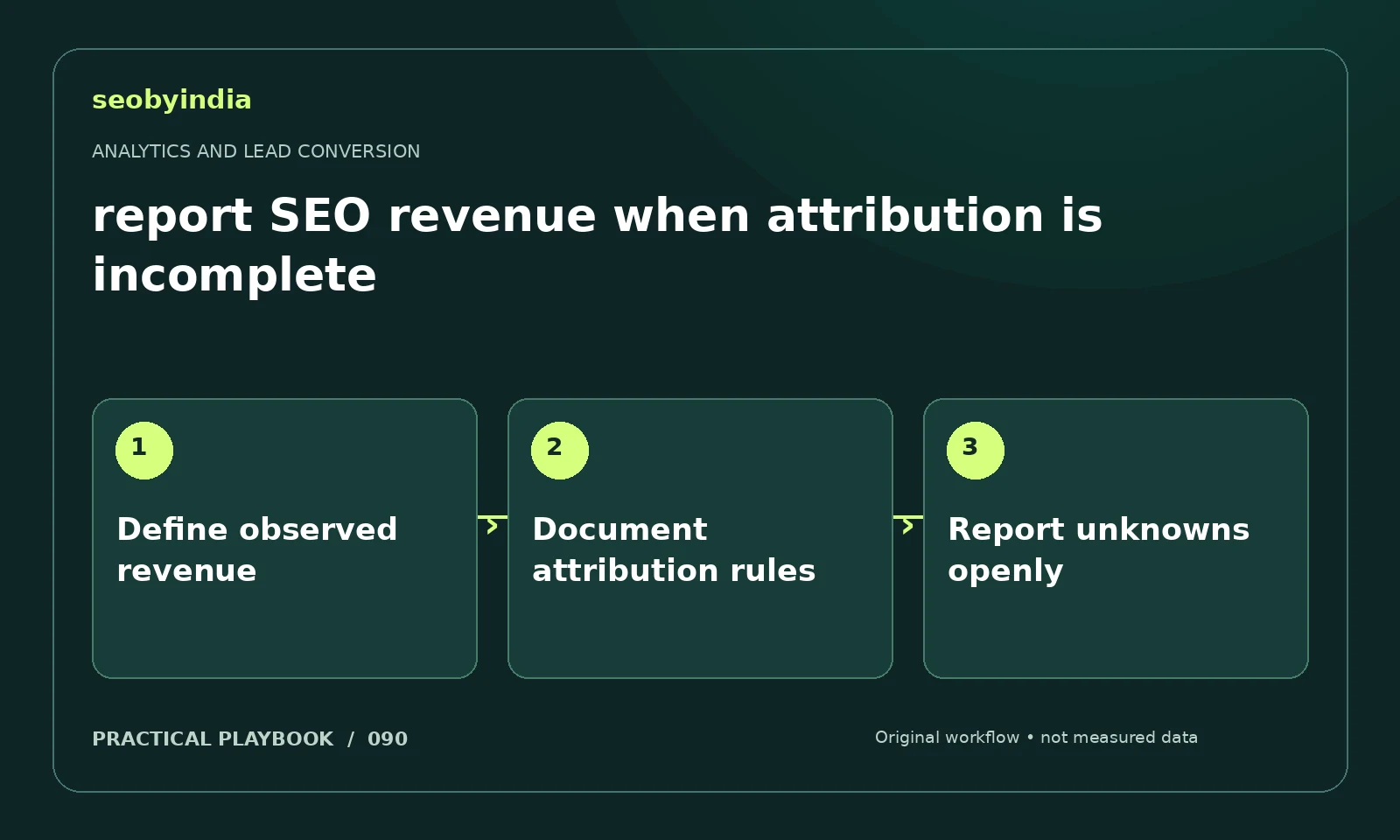
A three-step workflow
Define observed revenue
Define which revenue can be directly connected to recorded enquiries or sessions. Keep estimates separately labeled.
Document attribution rules
Write the attribution approach and its limitations, including missing CRM links or multi-channel journeys.
Report unknowns openly
Report observed, assisted and unknown contributions without double-counting the same sale as full revenue in every channel.
Illustrative example
Put the decision in context
If a sale follows several channels, show the reporting model and any CRM limitations. Avoid assigning the full deal value to every channel involved.
What to record in your working sheet
Keep the evidence beside the decision so the work can be checked and handed over. For this task, use these fields:
- Page, event or report name
- Metric scope and counting rule
- Observed record and comparison period
- Known tracking gaps and next validation
A mistake to avoid
Claiming the same sale multiple times across channel reports.
References and further reading
The workflow and illustrative example are SEOByIndia editorial guidance. Use the linked primary documentation for platform requirements; interfaces and policies can change.
Need help applying this to your site?
Share your website, the problem you are investigating and the evidence you already have. We can discuss a focused scope and the next useful check.
Discuss lead measurement