
The short answer
Use permissioned, anonymized data and disclose sampling limits before describing patterns.
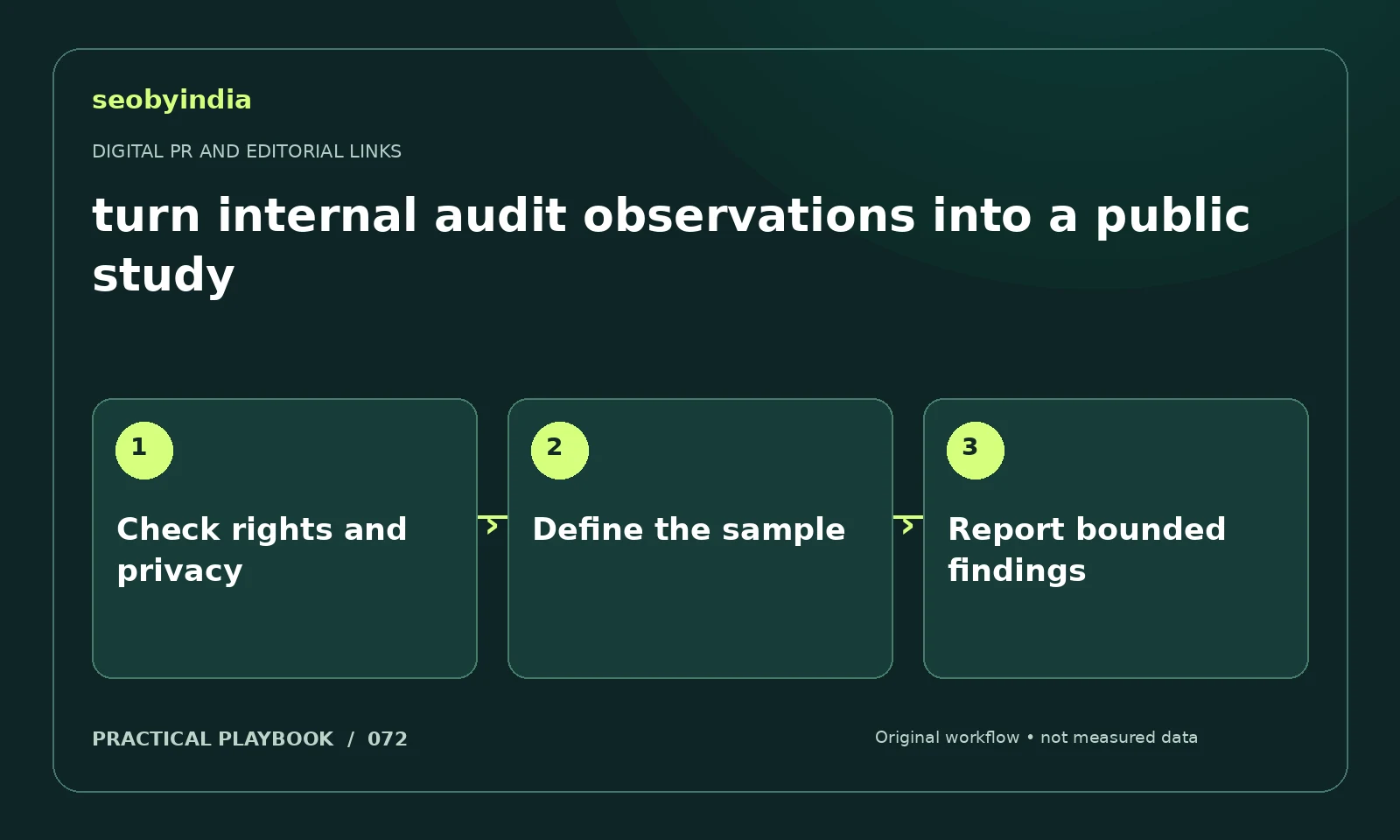
A three-step workflow
Check rights and privacy
Confirm rights to use the data and remove identifying or confidential details. Client access does not automatically authorize public research.
Define the sample
Define which cases are included, how many were examined and how selection occurred. Keep the sample boundaries explicit.
Report bounded findings
Report the pattern within that sample and explain what it cannot establish. Preserve the evidence behind every numerical statement.
Illustrative example
Put the decision in context
If only a few consenting businesses contribute data, describe those businesses as the sample rather than claiming an industry-wide conclusion.
What to record in your working sheet
Keep the evidence beside the decision so the work can be checked and handed over. For this task, use these fields:
- Publication or resource URL
- Audience fit and evidence source
- Contact route or placement context
- Verified result and measurement limits
A mistake to avoid
Publishing client performance or confidential details without permission.
References and further reading
The workflow and illustrative example are SEOByIndia editorial guidance. Use the linked primary documentation for platform requirements; interfaces and policies can change.
Need help applying this to your site?
Share your website, the problem you are investigating and the evidence you already have. We can discuss a focused scope and the next useful check.
Discuss a relevant digital PR resource