
The short answer
Lead with the relevant finding or tool and explain why the publication's readers would use it.
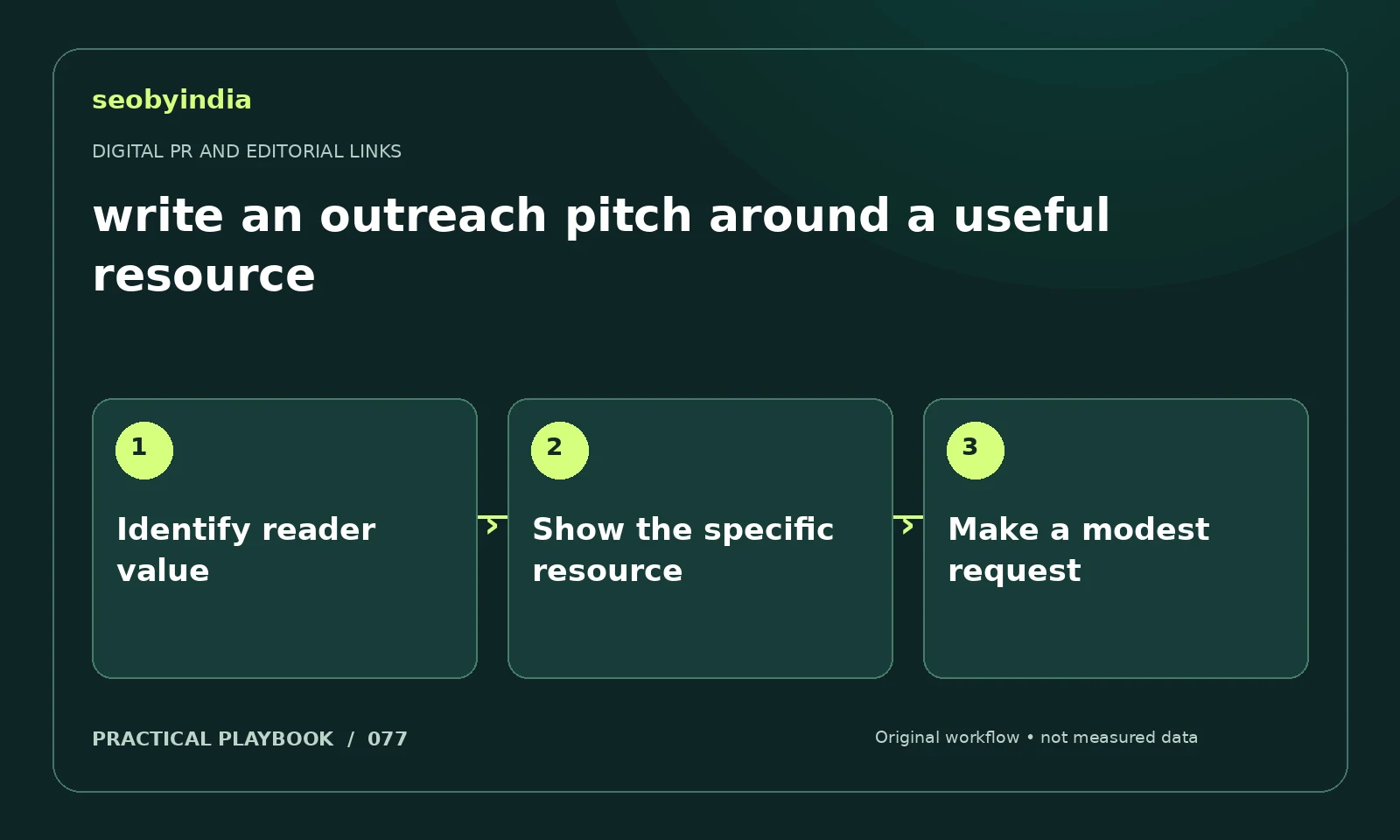
A three-step workflow
Identify reader value
Identify a current editorial topic and explain why the resource serves that audience. Personalization should change the proposal, not just the greeting.
Show the specific resource
Show the specific finding, example or tool with enough context to assess its value. Keep claims proportionate to the evidence.
Make a modest request
Make a concise, optional request and respect the editor's decision. A link is an editorial choice, not an entitlement.
Illustrative example
Put the decision in context
Pitch a transparent migration checklist to an editor covering site redesigns, with a short explanation of the problem it helps readers avoid.
What to record in your working sheet
Keep the evidence beside the decision so the work can be checked and handed over. For this task, use these fields:
- Publication or resource URL
- Audience fit and evidence source
- Contact route or placement context
- Verified result and measurement limits
A mistake to avoid
Sending a generic request to exchange links with no editorial value.
References and further reading
The workflow and illustrative example are SEOByIndia editorial guidance. Use the linked primary documentation for platform requirements; interfaces and policies can change.
Need help applying this to your site?
Share your website, the problem you are investigating and the evidence you already have. We can discuss a focused scope and the next useful check.
Discuss a relevant digital PR resource