
The short answer
Explain selection criteria and meaningful differences rather than adding generic keyword paragraphs.
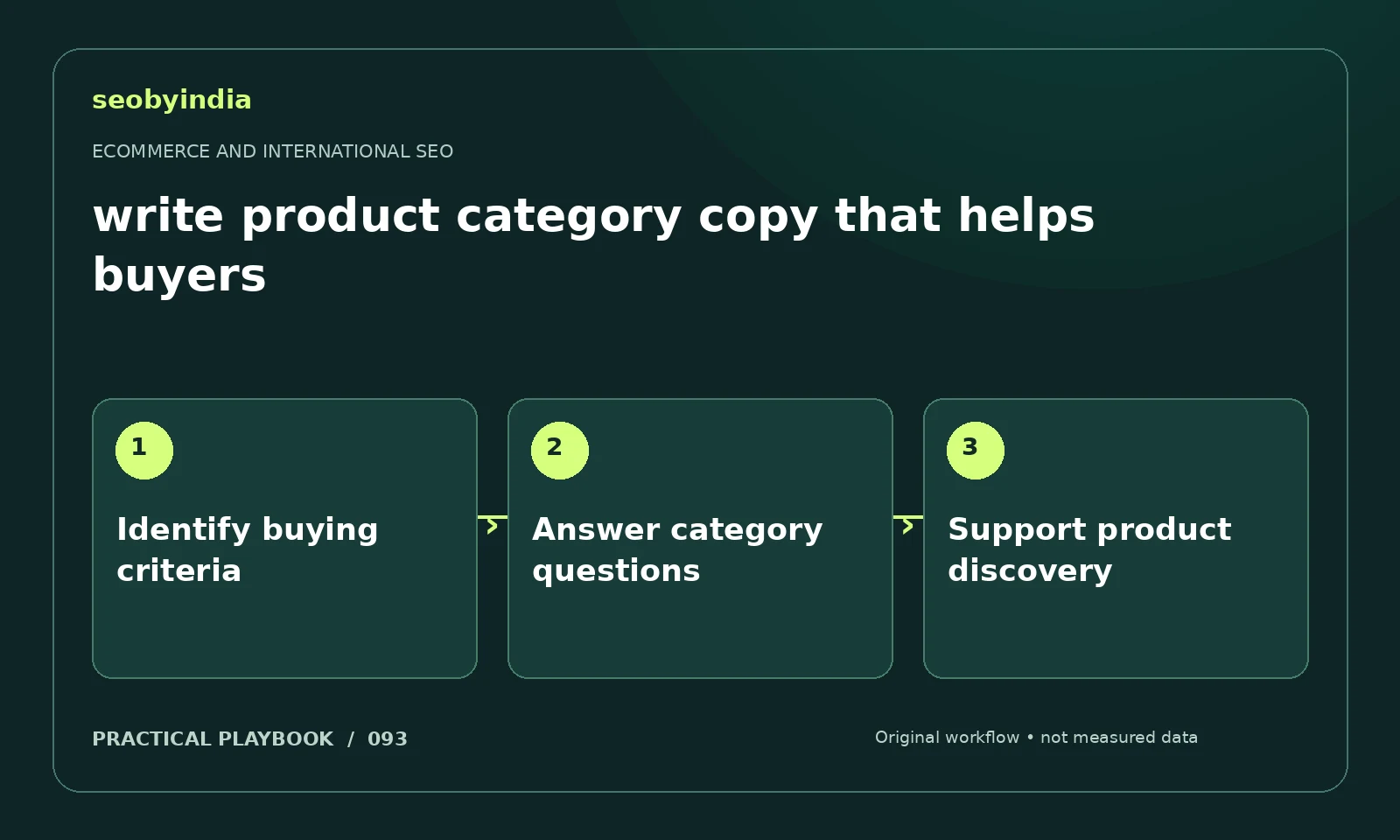
A three-step workflow
Identify buying criteria
Ask what buyers need to compare within this category, including dimensions, materials, compatibility or use cases.
Answer category questions
Answer those questions with specific criteria and useful differences. Keep claims consistent with the products currently offered.
Support product discovery
Help readers reach the right products and filters. Keep the copy readable and subordinate to the shopping task rather than a keyword target.
Illustrative example
Put the decision in context
An office chair category can explain adjustability, dimensions and intended use while linking to appropriate products.
What to record in your working sheet
Keep the evidence beside the decision so the work can be checked and handed over. For this task, use these fields:
- Product, regional or legacy URL
- Inventory or audience requirement
- Preferred destination and technical signals
- Implementation owner and verification result
A mistake to avoid
Placing long repetitive copy above the products just to reach a word count.
References and further reading
The workflow and illustrative example are SEOByIndia editorial guidance. Use the linked primary documentation for platform requirements; interfaces and policies can change.
Need help applying this to your site?
Share your website, the problem you are investigating and the evidence you already have. We can discuss a focused scope and the next useful check.
Discuss your ecommerce or migration audit