
Understand the decision
An unlinked mention does not create an obligation for a publication to add a link. Treat it as a possible editorial correction or helpful addition, not a debt.
Review known backlinks, old URLs and relevant mentions. Prioritise actual reader use and editorial relevance rather than every automated alert.
A practical workflow
Work through the sequence below. Keep the evidence, the change you make and the acceptance check together so the next person can understand the decision.
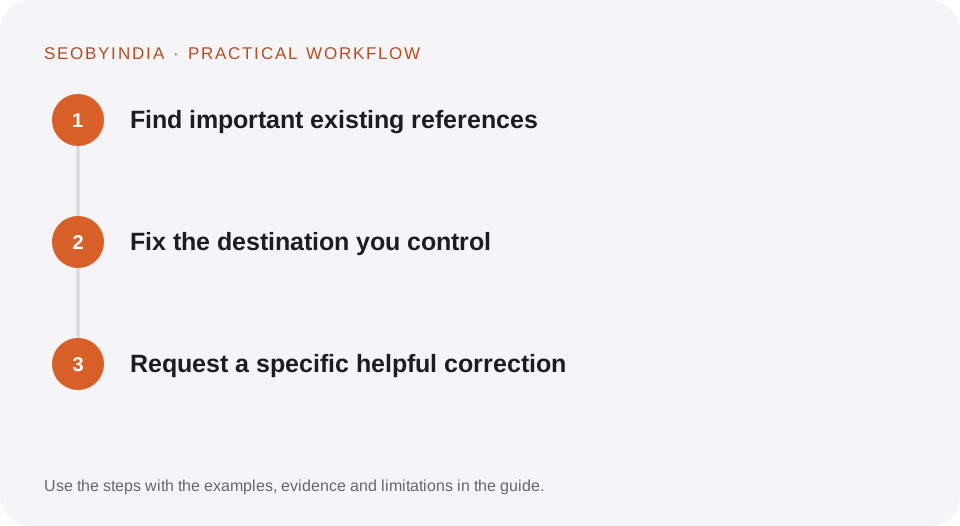
Find important existing references
Review known backlinks, old URLs and relevant mentions. Prioritise actual reader use and editorial relevance rather than every automated alert.
Fix the destination you control
Restore useful content or create an appropriate redirect when an old URL changed. Confirm the final page satisfies the reference before asking anyone else to edit their work.
Request a specific helpful correction
Explain the broken or misleading path and supply the correct destination. Keep the message brief and let the publisher decide. Record the outcome without repeated pressure.
Illustrative scenario
What this looks like in practice
A trade guide links to a checklist that moved during a redesign. The business first creates a direct redirect, then informs the editor of the clean final URL for future updates.
This is a worked example, not a claim about a client campaign or a promised result.
Before you sign it off
Do not demand a commercial anchor or paid placement in a correction request. Avoid redirecting a referenced educational asset to an unrelated sales page.
Keep a useful decision record
- Purpose
- Write the customer task this change is meant to improve.
- Evidence
- Save the relevant page, source or observation and its date.
- Owner
- Identify who implements the change and who verifies it.
- Acceptance
- State what a correct result looks like before measuring its wider effect.
What to measure
Track repaired entry points, accurate live references and referral quality after the correction.
Record the baseline and the observation window. If the measurement setup changes, annotate the report before comparing periods. Use the findings to choose the next useful improvement, rather than treating one encouraging result as proof of a permanent outcome.
Sources and further reading
These primary references provide platform guidance and context. The workflows and scenarios on this page are editorial explanations; a source link does not turn an example into a measured result.
Need help applying this?
Start with your website, target audience and the problem you want to solve. We can agree on the useful work, implementation responsibilities and reporting.
Explore the relevant serviceDiscuss the scope