
The short answer
Define the evidence that would trigger rollback, the responsible owner and the technical steps before launch.
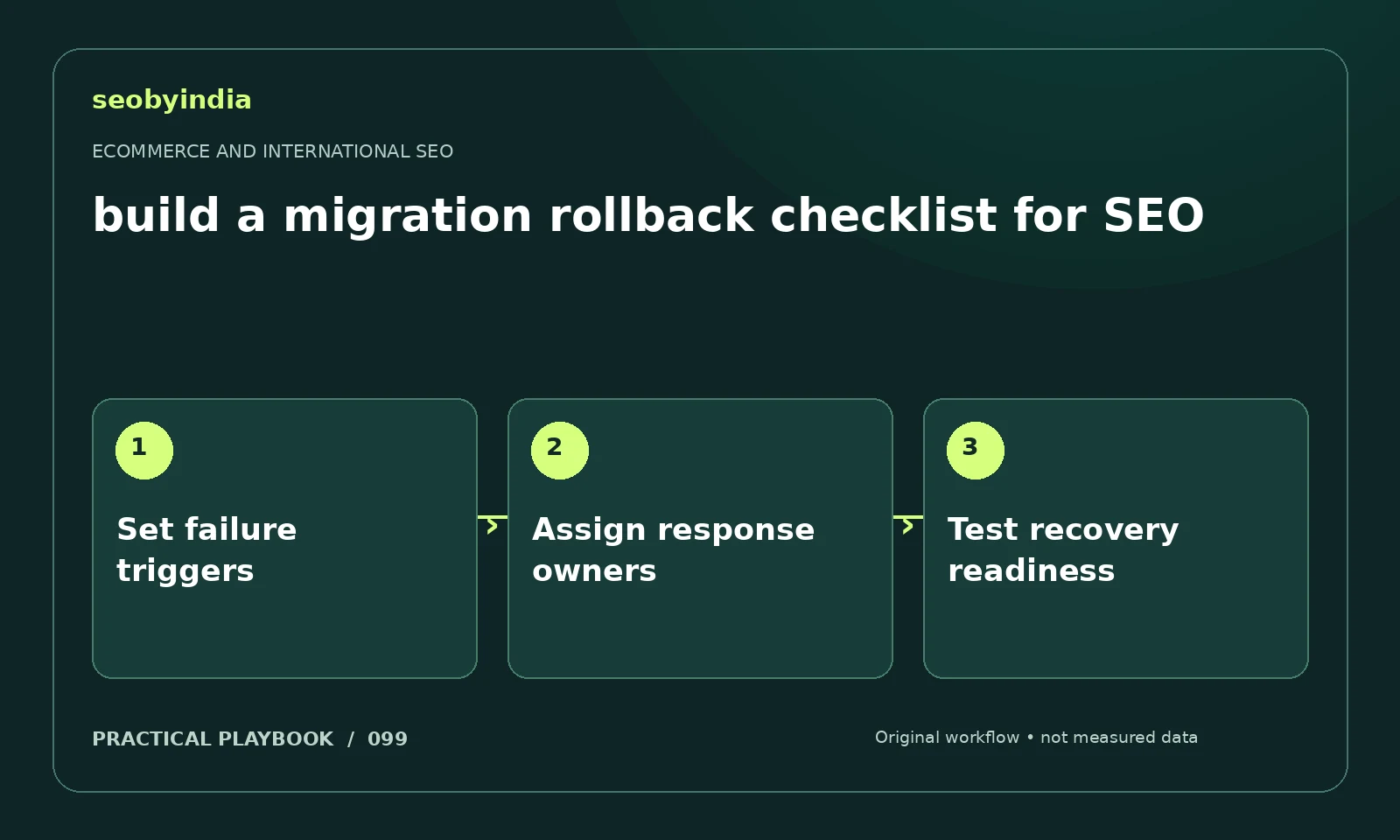
A three-step workflow
Set failure triggers
Define observable failure conditions such as widespread broken routing or inaccessible core journeys. Keep ordinary reporting delays separate.
Assign response owners
Name the people who decide, implement and communicate recovery. Record dependencies on hosting, deployment or database changes.
Test recovery readiness
Have technical owners verify a recoverable previous state and the restoration procedure. A written plan should match the actual deployment system.
Illustrative example
Put the decision in context
A launch plan should distinguish a measurement delay from a widespread routing failure. Technical owners must know how to restore the previous working configuration.
What to record in your working sheet
Keep the evidence beside the decision so the work can be checked and handed over. For this task, use these fields:
- Product, regional or legacy URL
- Inventory or audience requirement
- Preferred destination and technical signals
- Implementation owner and verification result
A mistake to avoid
Rolling back solely because rankings fluctuate immediately after launch.
References and further reading
The workflow and illustrative example are SEOByIndia editorial guidance. Use the linked primary documentation for platform requirements; interfaces and policies can change.
Need help applying this to your site?
Share your website, the problem you are investigating and the evidence you already have. We can discuss a focused scope and the next useful check.
Discuss your ecommerce or migration audit