
The short answer
Balance meaningful shopping differences with duplicate-content and navigation considerations.
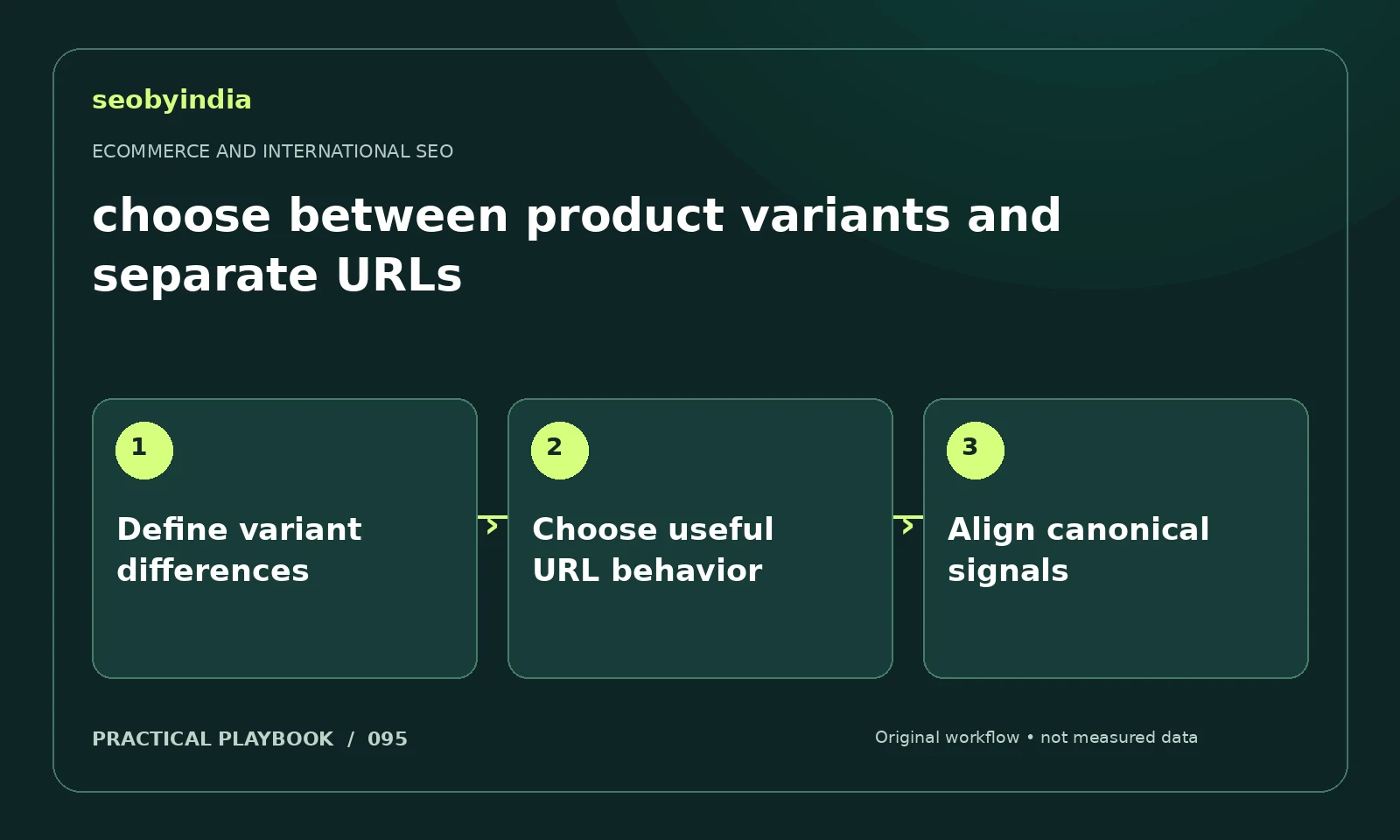
A three-step workflow
Define variant differences
Identify what changes between variants and whether a customer needs a distinct landing experience for each.
Choose useful URL behavior
Design URL and navigation behavior that allows the intended choice to be reached and understood. Avoid accidental duplicate paths.
Align canonical signals
Align canonical and other signals with the actual product model. Validate representative variants before applying a template-wide rule.
Illustrative example
Put the decision in context
Size-only variations may share a main product experience, while materially different products may need distinct pages. Evaluate the actual assortment.
What to record in your working sheet
Keep the evidence beside the decision so the work can be checked and handed over. For this task, use these fields:
- Product, regional or legacy URL
- Inventory or audience requirement
- Preferred destination and technical signals
- Implementation owner and verification result
A mistake to avoid
Applying a universal canonical rule to every product variation.
References and further reading
The workflow and illustrative example are SEOByIndia editorial guidance. Use the linked primary documentation for platform requirements; interfaces and policies can change.
Need help applying this to your site?
Share your website, the problem you are investigating and the evidence you already have. We can discuss a focused scope and the next useful check.
Discuss your ecommerce or migration audit