
The short answer
Record substantive corrections and changes with a date and short explanation.
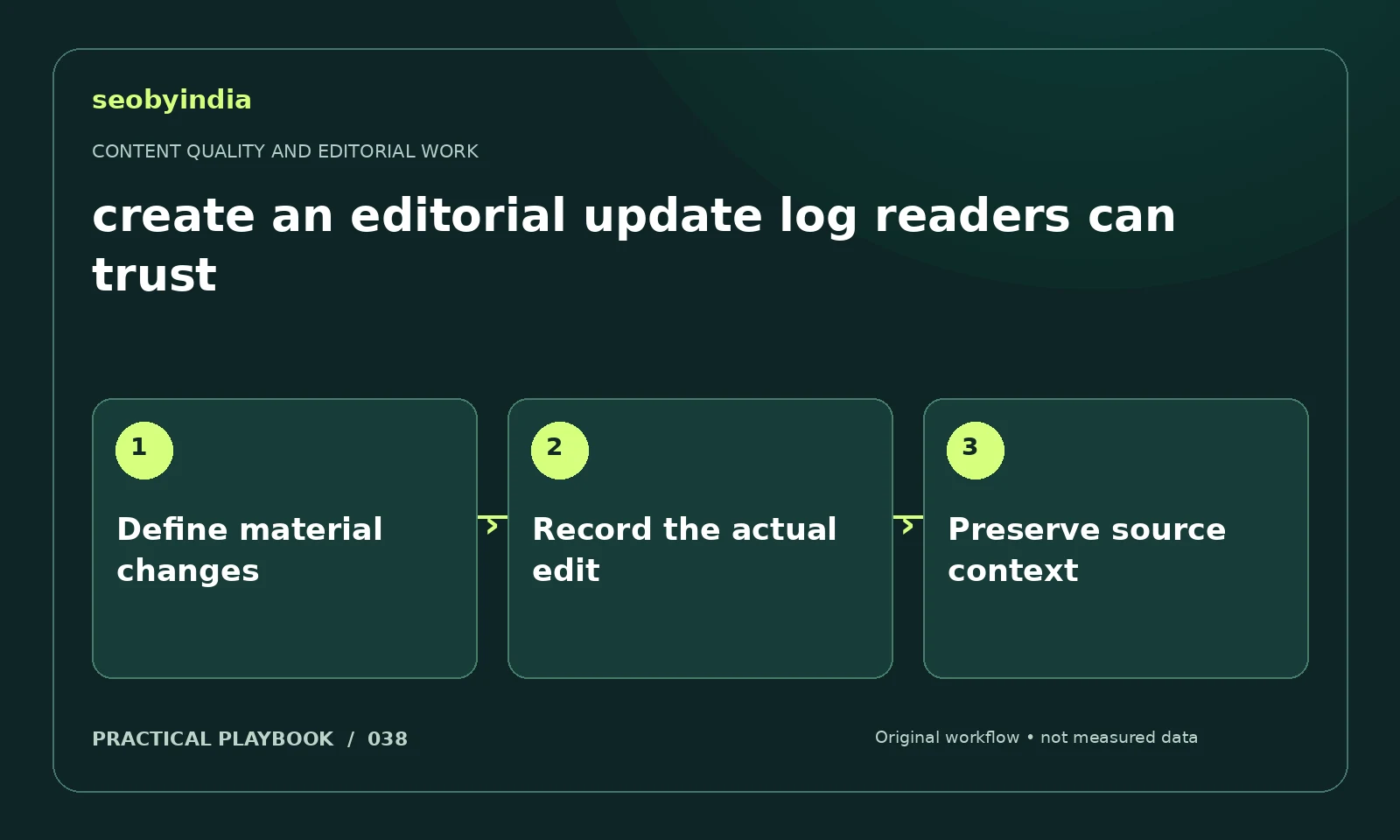
A three-step workflow
Define material changes
Choose which changes matter to a returning reader, such as a corrected procedure, source replacement or material factual update.
Record the actual edit
Record what actually changed and when. Keep the explanation concise enough that it remains useful alongside the article.
Preserve source context
Preserve the context of replaced evidence where appropriate. Do not imply a complete expert review if only one section was checked.
Illustrative example
Put the decision in context
If a product changes a reporting field, note the corrected instructions and update date. A punctuation correction does not require a freshness claim.
What to record in your working sheet
Keep the evidence beside the decision so the work can be checked and handed over. For this task, use these fields:
- Article URL and reader task
- Claim or section requiring work
- Source and proposed editorial change
- Reviewer, completion check and actual update date
A mistake to avoid
Changing the displayed date without changing the content.
References and further reading
The workflow and illustrative example are SEOByIndia editorial guidance. Use the linked primary documentation for platform requirements; interfaces and policies can change.
Need help applying this to your site?
Share your website, the problem you are investigating and the evidence you already have. We can discuss a focused scope and the next useful check.
Discuss an editorial content review