
The short answer
Assess whether the page has a current useful purpose and realistic inventory rather than applying one rule to every category.
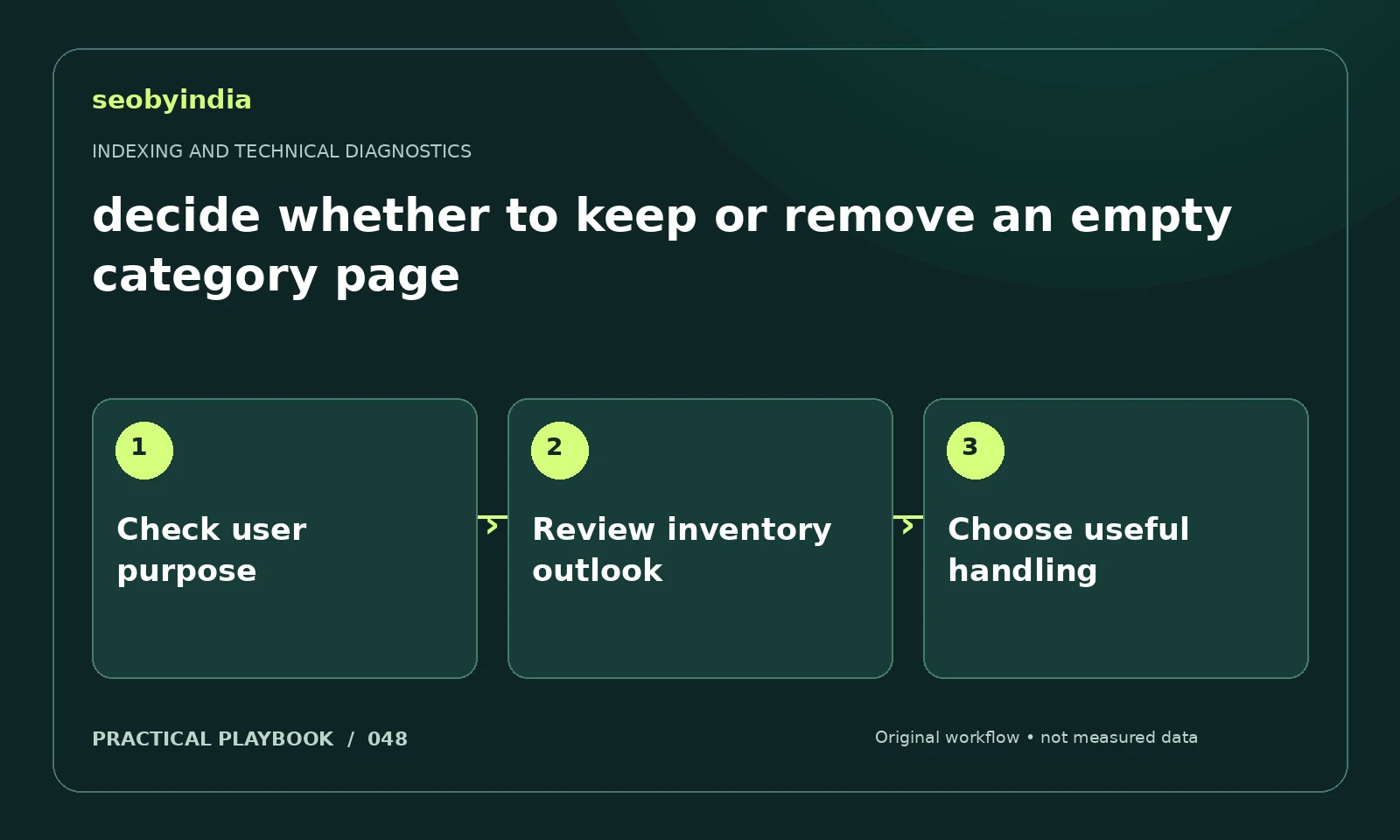
A three-step workflow
Check user purpose
Determine whether the category still helps a buyer and whether its purpose is temporary, seasonal or permanently obsolete.
Review inventory outlook
Ask the inventory or service owner about realistic future availability. Provide useful alternatives when they genuinely match the task.
Choose useful handling
Choose a substantive retained page or an appropriate retirement strategy. Verify response behavior and update internal navigation accordingly.
Illustrative example
Put the decision in context
A temporarily empty seasonal category may explain availability and useful alternatives. An obsolete category may need retirement with an appropriate response.
What to record in your working sheet
Keep the evidence beside the decision so the work can be checked and handed over. For this task, use these fields:
- Affected URL and expected behavior
- Observed response and page directive
- Conflicting signal or supporting evidence
- Proposed fix, owner and retest result
A mistake to avoid
Redirecting unrelated empty categories to any page that still sells something.
References and further reading
The workflow and illustrative example are SEOByIndia editorial guidance. Use the linked primary documentation for platform requirements; interfaces and policies can change.
Need help applying this to your site?
Share your website, the problem you are investigating and the evidence you already have. We can discuss a focused scope and the next useful check.
Discuss a technical SEO audit