
Understand the decision
Backlink databases are incomplete and metrics differ. Combine available exports with Search Console information and direct inspection of important referring pages.
Retain the source, target, anchor and discovery information from each dataset. Note that different tools may find different links and dates.
A practical workflow
Work through the sequence below. Keep the evidence, the change you make and the acceptance check together so the next person can understand the decision.
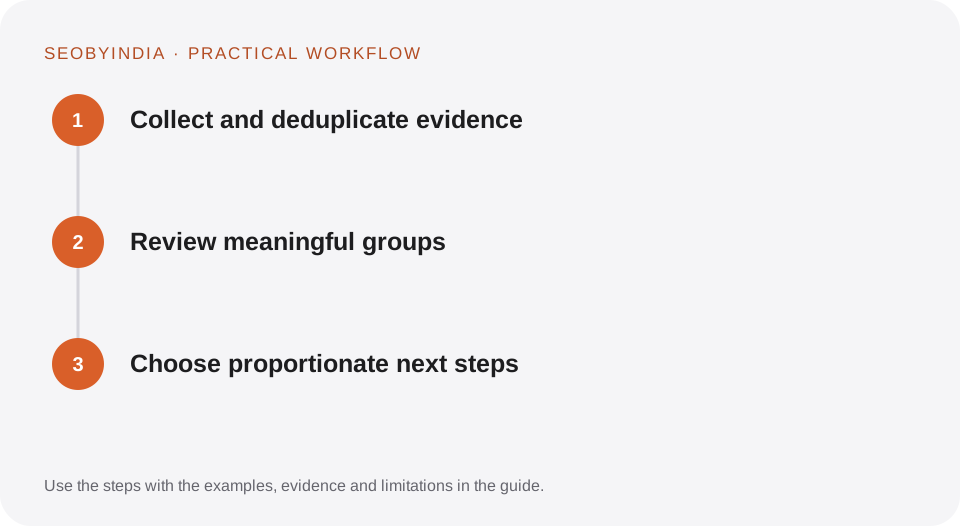
Collect and deduplicate evidence
Retain the source, target, anchor and discovery information from each dataset. Note that different tools may find different links and dates.
Review meaningful groups
Group by referring domain, topic, target page and unusual anchor patterns. Inspect representative pages. Distinguish normal spam that many sites receive from a pattern tied to the business’s own link activity.
Choose proportionate next steps
Repair valuable broken destinations and investigate questionable purchased arrangements. Treat disavowal as a specialised decision requiring current official guidance, not a routine response to every low metric.
Illustrative scenario
What this looks like in practice
The audit discovers useful industry articles linking to an old guide URL that now fails. Restoring a relevant destination or redirect is a concrete improvement before chasing every unsolicited spam domain.
This is a worked example, not a claim about a client campaign or a promised result.
Before you sign it off
Do not mass-disavow links solely because a commercial tool assigns a warning. Avoid promising that removing a few weak links will automatically recover traffic.
Keep a useful decision record
- Purpose
- Write the customer task this change is meant to improve.
- Evidence
- Save the relevant page, source or observation and its date.
- Owner
- Identify who implements the change and who verifies it.
- Acceptance
- State what a correct result looks like before measuring its wider effect.
What to measure
Track valuable references preserved, broken destinations repaired and documented risks investigated. Keep traffic recovery hypotheses separate.
Record the baseline and the observation window. If the measurement setup changes, annotate the report before comparing periods. Use the findings to choose the next useful improvement, rather than treating one encouraging result as proof of a permanent outcome.
Sources and further reading
These primary references provide platform guidance and context. The workflows and scenarios on this page are editorial explanations; a source link does not turn an example into a measured result.
Need help applying this?
Start with your website, target audience and the problem you want to solve. We can agree on the useful work, implementation responsibilities and reporting.
Explore the relevant serviceDiscuss the scope