
Understand the decision
An attractive infographic with unsupported numbers is weaker than a straightforward resource with clear evidence and practical instructions. Choose usefulness before production complexity.
Find a recurring question that publications or customers struggle to answer clearly. Decide what the resource will let someone understand or do that existing material does not.
A practical workflow
Work through the sequence below. Keep the evidence, the change you make and the acceptance check together so the next person can understand the decision.
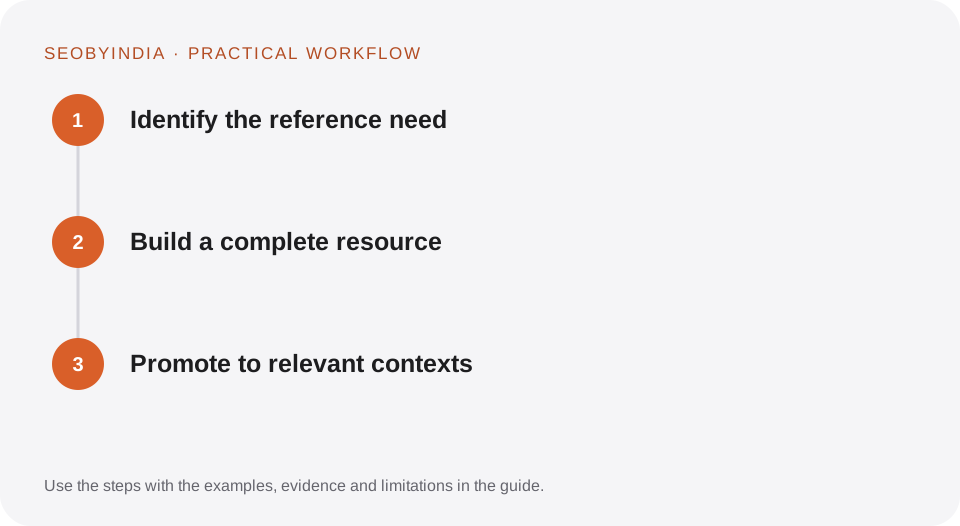
Identify the reference need
Find a recurring question that publications or customers struggle to answer clearly. Decide what the resource will let someone understand or do that existing material does not.
Build a complete resource
Include the method, definitions, examples and limitations. Make important information available as HTML and offer a PDF when printing or offline use helps. Keep the download linked to its explanatory page.
Promote to relevant contexts
Share the resource with publications where it supports a real story or guide. Explain the reader benefit. Monitor references and correct mistakes without demanding a link from every mention.
Illustrative scenario
What this looks like in practice
A supplier publishes a practical maintenance inspection sheet with an HTML explanation and printable PDF. A trade writer can reference the checklist, while readers can understand its scope before downloading it.
This is a worked example, not a claim about a client campaign or a promised result.
Before you sign it off
Do not gate every useful fact behind a lead form if the goal is easy reference. Avoid presenting generic AI-generated filler as proprietary research.
Keep a useful decision record
- Purpose
- Write the customer task this change is meant to improve.
- Evidence
- Save the relevant page, source or observation and its date.
- Owner
- Identify who implements the change and who verifies it.
- Acceptance
- State what a correct result looks like before measuring its wider effect.
What to measure
Track actual resource use, relevant references, useful feedback and resulting business conversations.
Record the baseline and the observation window. If the measurement setup changes, annotate the report before comparing periods. Use the findings to choose the next useful improvement, rather than treating one encouraging result as proof of a permanent outcome.
Sources and further reading
These primary references provide platform guidance and context. The workflows and scenarios on this page are editorial explanations; a source link does not turn an example into a measured result.
Need help applying this?
Start with your website, target audience and the problem you want to solve. We can agree on the useful work, implementation responsibilities and reporting.
Explore the relevant serviceDiscuss the scope