
The short answer
Check substance, evidence, originality and usefulness instead of only grammar.
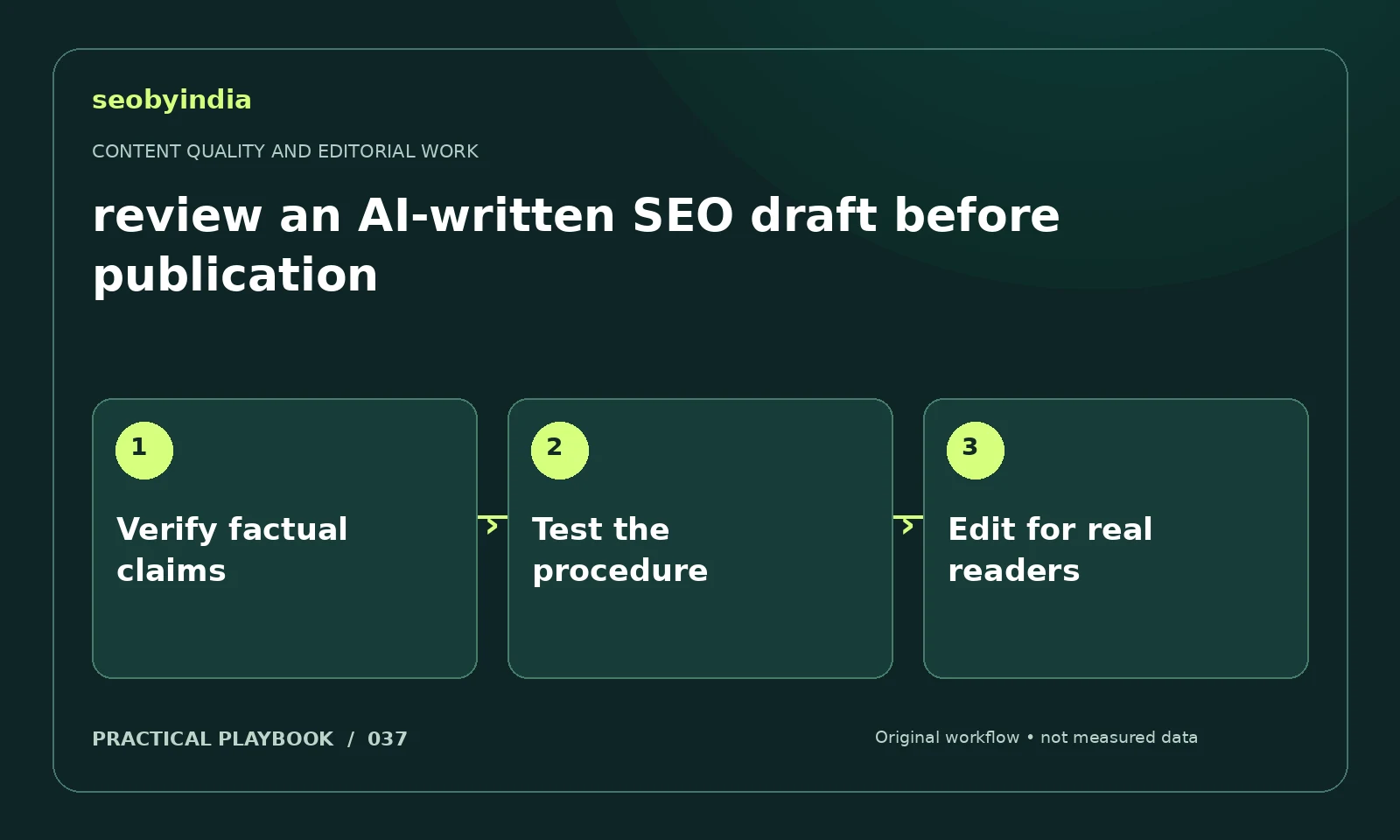
A three-step workflow
Verify factual claims
Extract important claims and compare them with current primary documentation. Remove references that do not support the nearby sentence.
Test the procedure
Walk through the proposed method where you have the required access. Mark instructions that depend on a particular tool version or permission.
Edit for real readers
Rewrite repetitive sections and add a concrete example. Approve the draft based on its usefulness and accuracy rather than its origin.
Illustrative example
Put the decision in context
Run through the stated steps where access allows and remove invented sources, unverifiable numbers and generic filler before approving the copy.
What to record in your working sheet
Keep the evidence beside the decision so the work can be checked and handed over. For this task, use these fields:
- Article URL and reader task
- Claim or section requiring work
- Source and proposed editorial change
- Reviewer, completion check and actual update date
A mistake to avoid
Using an AI detector score as the only editorial quality check.
References and further reading
The workflow and illustrative example are SEOByIndia editorial guidance. Use the linked primary documentation for platform requirements; interfaces and policies can change.
Need help applying this to your site?
Share your website, the problem you are investigating and the evidence you already have. We can discuss a focused scope and the next useful check.
Discuss an editorial content review